Reusable vs. Single-Use: What the EU Packaging Regulation (PPWR) Means for Your Packaging
Reusable or single-use? For a long time, this was purely a question of cost. Since 12 August 2026, the EU Packaging and Packaging Waste Regulation (PPWR) has had a say as well: from 2030, transport packaging used for transport between a company's own sites and for domestic deliveries must be fully reusable. This article explains how single-use and reusable packaging differ, what their advantages and disadvantages are, and what the PPWR specifically means for thermoformed trays, inlays, blisters and workpiece carriers.
Nils Bothe
Published on October 29, 2026
Share
Reusable vs. Single-Use under the PPWR: Key Facts at a Glance
Single-use packaging is used once and then recycled. Reusable packaging goes through many cycles and is reconditioned within a return system.
The PPWR has applied since 12 August 2026. According to the European Commission's guidelines, the principle that all packaging must be recyclable has applied since then.
From 1 January 2030, at least 40% of transport packaging must be reusable. For transport between a company's own sites and deliveries within the same EU country, 100% reusable packaging is required.
Single-use packaging such as blisters, inlays or single-use trays remains permitted, for example for sales packaging, exports and one-off deliveries. The prerequisite is that it is recyclable.
Whether single-use or reusable is the better choice depends on return logistics, number of cycles and transport route.
What Is the Difference Between Single-Use and Reusable Packaging?
Single-use packaging is designed for one use only. After transport or opening, it is disposed of and, ideally, recycled. Reusable packaging, by contrast, is designed for many cycles: after each delivery, it is returned, inspected, cleaned and used again.
In plastic thermoforming, both variants are produced using the same process. The difference lies in material, wall thickness and design. Single-use packaging is thin-walled and material-efficient, while reusable packaging has thicker walls, is often ribbed and is designed to withstand load and cleaning.
Single-Use vs. Reusable: Advantages and Disadvantages at a Glance
Single-use or reusable packaging: neither option is inherently superior. The following advantages and disadvantages show where each solution plays to its strengths.
Advantages of Reusable Packaging
Low cost per cycle: The higher unit price is spread across many uses.
Less waste: One reusable package replaces dozens to hundreds of single-use packages.
Robust component protection: Thicker walls and ribbing withstand repeated loads.
Easy to automate: Consistent geometries simplify robotic picking and storage logic.
PPWR-compliant: From 2030, reusable packaging counts towards the reuse target.
The PPWR (Packaging and Packaging Waste Regulation) is the new EU Packaging Regulation (EU) 2025/40. It replaces the previous Packaging Directive 94/62/EC and applies directly in all Member States. It entered into force on 11 February 2025 and has applied since 12 August 2026.
The objectives of the PPWR:
Reduce packaging waste
Improve recyclability
Increase the use of recycled content in plastic packaging
Strengthen reuse
Each Member State must reduce packaging waste per capita by 5% by 2030 and by 15% by 2040 compared with 2018.
Key deadlines for single-use and reusable packaging:
Date
What applies
Reference
11 Feb 2025
The Regulation enters into force
Art. 71
12 Aug 2026
Recyclability as a principle, heavy metal limits, conformity assessment and EU declaration of conformity apply
Art. 5, 6, 38, 39
1 Jan 2030
40% reusable transport packaging, 100% for inter-site transport and domestic deliveries
Art. 29(1)–(3)
1 Jan 2030*
At least recyclability grade C, 35% recycled content for other plastic packaging, maximum 50% empty space
Art. 6, 7, 24
1 Jan 2038*
Only recyclability grade A or B
Art. 6(3)
2040
70% reusable transport packaging – as a best-efforts target, not a binding obligation
Art. 29(1)
💡 Note: The deadlines marked with * depend on delegated acts that the European Commission has not yet adopted. They apply from the stated date at the earliest and may be postponed.
Who Is Affected by the PPWR?
The PPWR covers almost all companies that manufacture, import or distribute packaging or transport their products in it. This applies equally to single-use and reusable packaging, regardless of whether it is sales, grouped or transport packaging. Thermoformed trays,inlays, blisters and load carriers in the B2B sector are also covered.
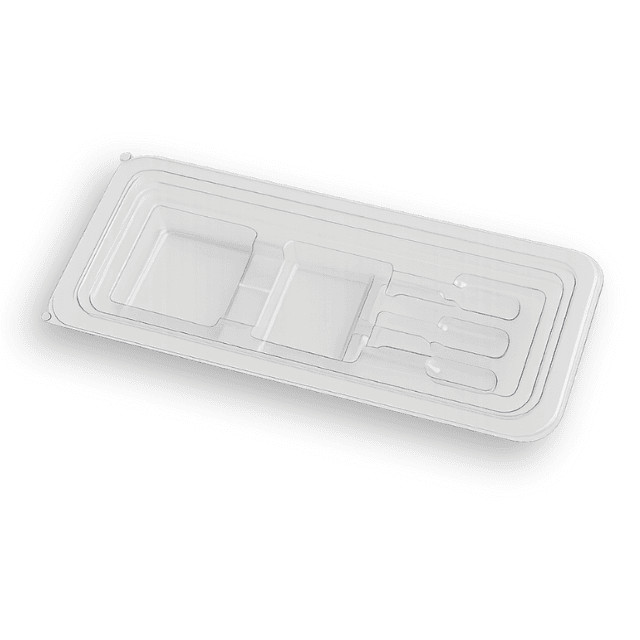
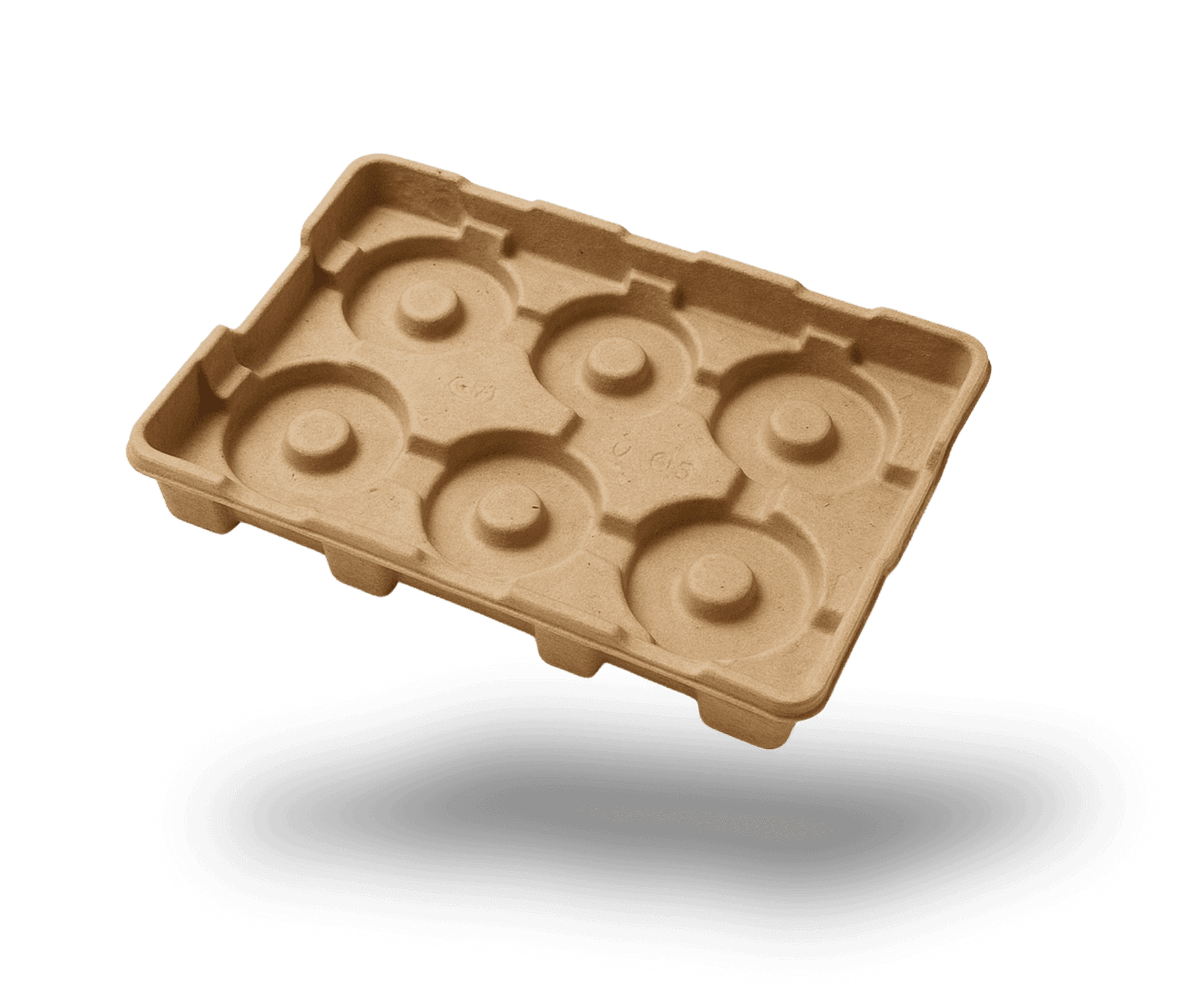
Example of a plastic inlay
Responsibility for the reuse targets lies with the user, i.e. the company that delivers its products in the packaging or makes them available on the EU market. Companies that ship components in transport packaging to customers or other sites are generally responsible themselves.
Particularly affected are:
Suppliers delivering components to OEMs in trays
Companies with several sites and internal parts traffic
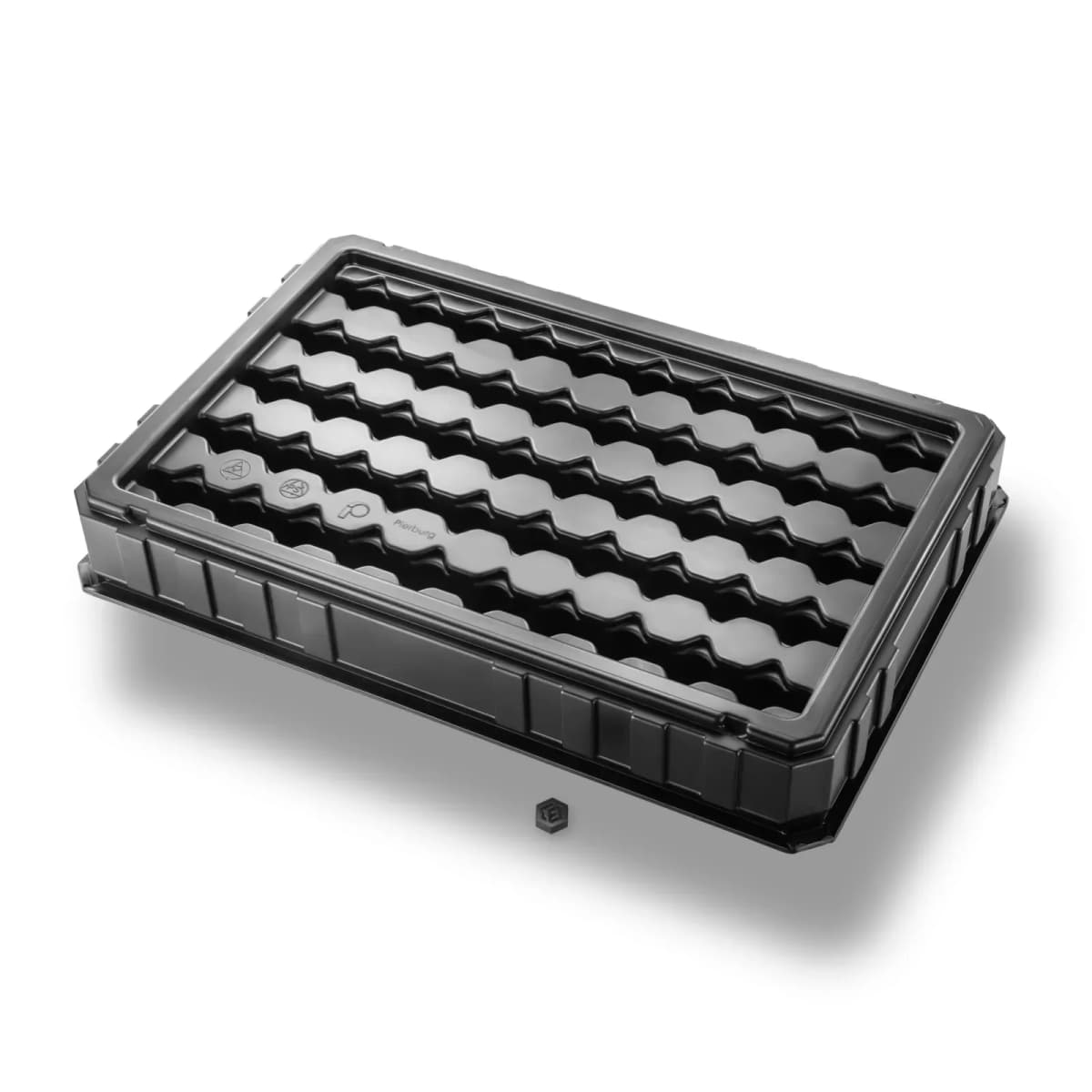
Electronics manufacturers transporting printed circuit boards and modules in ESD trays
Manufacturers of medical devices and consumer goods using blister or inlay packaging
Which Reuse Obligations Apply to Transport Packaging?
The reuse targets in Article 29 apply to transport packaging and to sales packaging used for transport. The Regulation lists the formats individually: pallets, foldable plastic crates, boxes, trays, plastic crates, intermediate bulk containers, pails, drums, canisters and flexible formats. Thermoformed trays used to transport components are therefore covered.
Classic sales packaging such as a medical blister or a cosmetics display pack, on the other hand, is not subject to these reuse targets. The requirements for recyclability and recycled content apply to it instead.
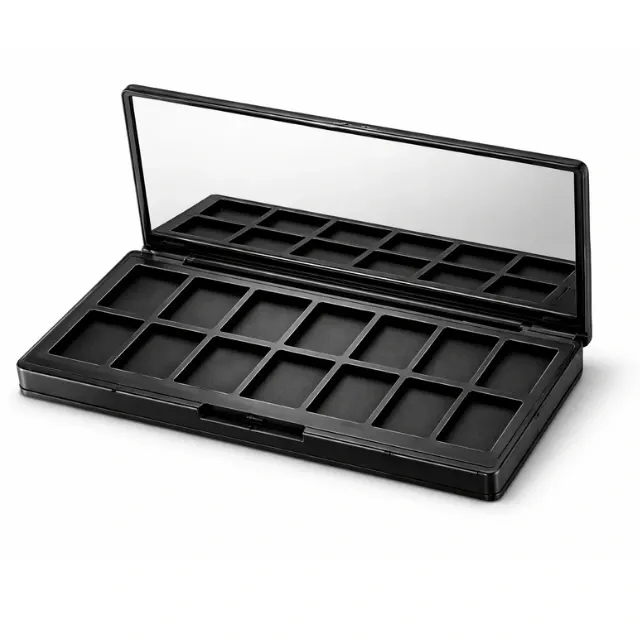
Example of cosmetics packaging
The 40% Target from 2030
From 1 January 2030, at least 40% of this transport packaging must be reusable and used within a re-use system. The target refers to a company's entire packaging stock.
Formats with a low reuse rate can be offset by formats with a high reuse rate. Single-use trays for cross-border deliveries can therefore form part of the remaining 60%.
The 100% Obligation for Inter-Site Transport and Domestic Deliveries
Also from 1 January 2030, transport packaging must be fully reusable when products are transported:
between a company's own sites or to linked enterprises and partner enterprises within the EU (Art. 29(2))
to another company within the same Member State, for example from a plant in Baden-Württemberg to a customer in Bavaria (Art. 29(3))
For many German suppliers, this is the key change. Delivery flows that currently go to domestic customers in single-use trays must be switched to reusable packaging by 2030, unless an exemption applies.
What Exemptions Are There?
Under Art. 29(4), the obligations in paragraphs 1 to 3 do not apply to:
dangerous goods within the meaning of Directive 2008/68/EC
large-sized machinery, equipment and commodities whose packaging is custom-designed for the customer
flexible formats in direct contact with food or feed
boxes made of cardboard
In addition, since 25 May 2026, pallet wrapping and straps have been exempt from the 100% obligation (Delegated Decision (EU) 2026/429). They still count towards the 40% target.
Micro-enterprises with fewer than ten employees and an annual turnover or balance sheet total of no more than EUR 2 million are also exempt from the reuse targets, provided they make no more than 1,000 kg of packaging available per year and per Member State. Both criteria must be met.
Common mistake: “Our tray is custom-made, so we are exempt.” This assumption falls short. The exemption for custom-designed packaging refers to large-sized machinery, equipment and commodities. According to the European Commission's guidelines, you must also prove that the packaging is tailored to a single product. A form-fitting tray for small parts produced in series is not automatically covered. Such cases should be legally assessed in advance.
What Applies to Single-Use Packaging such as Blisters and Inlays?
The PPWR does not prohibit single-use packaging. However, it gradually tightens the requirements for its design.
Recyclability: According to the European Commission's guidelines, the principle has applied since 12 August 2026. The specific recyclability grades A, B and C will follow by delegated act (see deadlines above).
Recycled content: From 2030, a minimum share of 35% applies to other, non-contact-sensitive plastic packaging. Lower targets apply to contact-sensitive packaging, such as in the food sector.
Medicine and pharma: The PPWR provides special rules and longer transition periods for packaging of medicinal products and medical devices.
Empty space: From 2030, grouped and transport packaging may have a maximum empty space ratio of 50%.
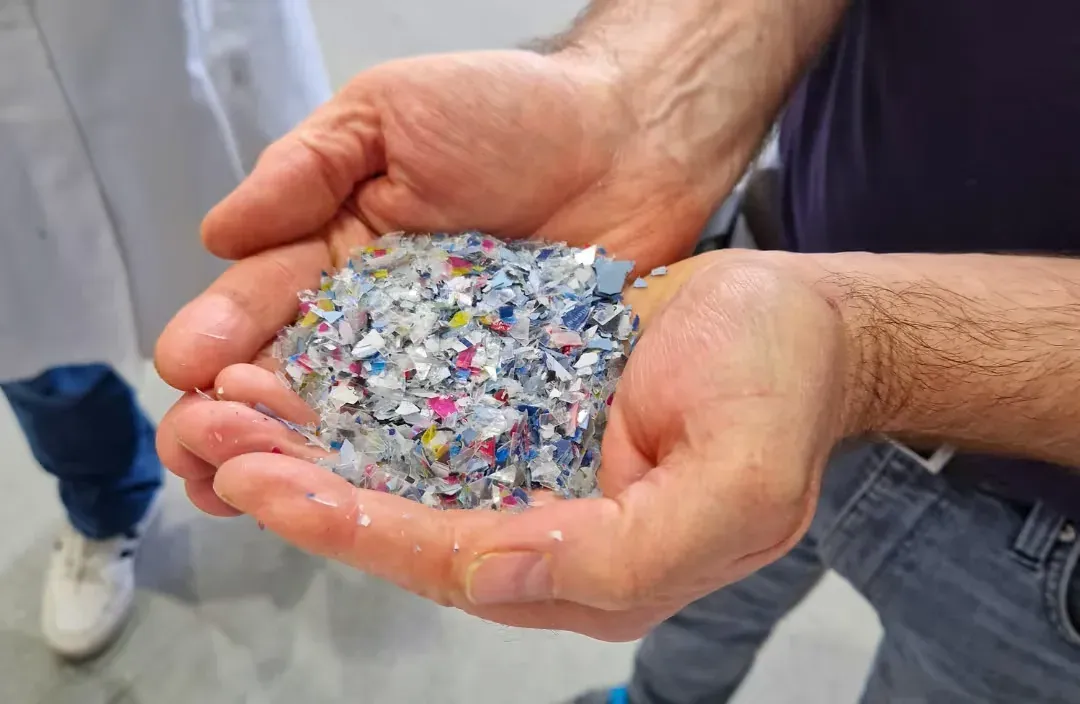
Plastic recyclate
What you can do today:
Use mono-materials and avoid composites, flocking or glued-in foam
Choose colourants and additives carefully, as they affect sortability
Test recycled-content films early, especially where optical requirements or ESD protection apply
Design cavities to fit the component closely to save empty space and material
Reusable packaging is the better choice when packaging circulates frequently, over short distances and between fixed partners. Single-use packaging is better when no return is possible or the packaging is needed only once. From both an ecological and an economic perspective, three factors are decisive: number of cycles, transport route and the effort required for return and cleaning.
Producing a reusable package requires more material and energy than producing a single-use package. This additional effort is only offset over the number of cycles. Long return routes, empty volume transported back and complex cleaning push the break-even point further out.
Calculation example (simplified, fictitious assumptions): A single-use tray costs €2.50 plus €0.20 for disposal. A reusable tray costs €15.00 and €0.80 per cycle for return and cleaning. In this example, reusable becomes cheaper from the 8th cycle onwards.
In practice, tooling costs, circulating stock and shrinkage must also be taken into account. You can read more about the cost structure in our article on unit and tooling costs in thermoforming.
When Does Single-Use Packaging Still Make Sense?
Single-use packaging is the better choice when:
it is sales packaging such as blisters, inlays or display packaging
components are delivered to other EU countries or outside the EU
no reliable return can be organised
it involves pre-series, prototypes or one-off projects
a documented exemption under Art. 29(4) applies
When Is It Worth Switching to Reusable Packaging?
Reusable packaging pays off where components regularly shuttle between fixed partners: between a company's own plants, in just-in-time supply to a domestic OEM or in circulation systems in automated production. This is exactly where the 100% obligation applies from 2030 anyway.
💡 Decision guide: Assess each delivery flow using three questions. Where does the packaging go? Does it come back? How often? If it shuttles between your own sites or to a customer in the same country, plan for reusable packaging. For exports without return, single-use remains a permissible option.
What Must Reusable Packaging Fulfil under the PPWR?
A robust design alone does not make packaging reusable within the meaning of the PPWR. Article 11 sets out the conditions: the packaging must be designed for many cycles, be emptied and reconditioned without damage and be recyclable at the end of its use. In addition, it must be used within a re-use system.
Reconditioning includes steps such as condition checks, sorting out damaged units, cleaning and fitness-for-use testing. The European Commission is to set a binding minimum number of cycles by delegated act. This has not yet been adopted.
Design requirements for PPWR-ready reusable packaging:
Material: mono-materials such as ABS, HDPE or PP instead of composites
Cleanability: open geometries without hard-to-reach undercuts, wash-resistant materials
Stacking concept: nestable when empty for space-saving return, see stacking techniques
Labelling: surfaces for labels, colour coding or tracking, see tray labelling
Fit:cavities closely matched to the component, without unnecessary volume
💡 Practical tip: Consider at the design stage whether the reusable tray can be nested when empty. This reduces return volume and therefore the cost per cycle. With formary's DfM analysis, the CAD model can be checked for thermoformability in advance.
By playing the video, you agree that your data will be transmitted to YouTube and that you have read the Privacy Policy.
How to Review Your Packaging Portfolio in 5 Steps
Record packaging and delivery flows: List all single-use and reusable packaging with sender, recipient, country and annual volume.
Separate sales and transport packaging: Blisters and display packaging are subject to recyclability and recycled-content requirements; trays and load carriers are additionally subject to the reuse targets.
Mark the 100% flows: Identify transport between your own sites and to domestic customers. The reuse obligation applies here from 2030.
Check exemptions and the target: Document exemptions under Art. 29(4) and check whether at least 40% reusable packaging is achieved across your total stock.
Assess packaging technically: Check material, recyclability and suitability for reuse, and plan redesigns with sufficient lead time for tooling and material tests.
What Data Does formary Need for Your Inquiry?
For a reliable quote and a PPWR-compliant design, formary needs some key data. The more complete this information is, the more precisely material, wall thickness and stacking concept can be determined. You can find a detailed overview in the checklist for thermoforming inquiries.
3D model or drawing of the component and, if applicable, of the existing packaging
Type of use: single-use or reusable, planned number of cycles and transport route
External dimensions or target container, such as KLT, cardboard box or load carrier
Component weight and number of parts per package
Special requirements such as ESD protection, cleanroom, cleaning process or automated picking
Annual demand and desired delivery dates
Conclusion: Since the PPWR, Reusable vs. Single-Use Is Also a Compliance Question
For a long time, the choice between single-use and reusable was primarily a question of cost. With the PPWR, it becomes a matter of obligation for transport packaging: from 2030, 100% reusable packaging applies to inter-site transport and domestic deliveries, and a 40% target applies to all other transport packaging. Single-use packaging such as blisters, inlays and single-use trays remains permitted, but must be recyclable and, from 2030, contain recycled content.
Tooling, material tests and setting up return systems all require lead time. Analyse your delivery flows early. formary technically assesses your single-use or reusable packaging and finds the solution that meets your requirements.
Note: This article does not constitute legal advice. The wording of Regulation (EU) 2025/40 is authoritative. Individual deadlines depend on legal acts of the European Commission that are still pending. As of: October 2026.
Frequently Asked Questions about Reusable and Single-Use Packaging
Single-use packaging is used once and then disposed of or recycled. Reusable packaging is designed for many cycles and is returned, inspected and cleaned after each delivery. In plastic thermoforming, the two differ mainly in material and wall thickness: single-use packaging is thin-walled, for example made of PET-A or PS, while reusable packaging has thicker walls and is often made of ABS, HDPE or PP.
Whether single-use or reusable is better depends on the delivery flow. Reusable packaging has economic and ecological advantages when packaging circulates frequently, over short distances and between fixed partners. Single-use is more suitable for exports, one-off deliveries, pre-series production or when hygiene requires single use. The decisive factors are the number of cycles, the transport route and the effort required for return and cleaning.
Typical single-use packaging includes blister packaging for medical devices, inlays and display packaging for consumer goods, cosmetics and food packaging, and thin-walled single-use trays for shipping and sample deliveries. It is usually made of PET-A, PS or thin-walled PP and designed for low material input and a single use.
No, single-use packaging is not prohibited under the PPWR. It remains permitted if it is recyclable and, from 2030, meets the recycled-content targets. From 2030, however, a 40% reuse target applies to transport packaging across the total stock. For transport between a company's own sites and to companies in the same Member State, the Regulation requires 100% reusable packaging, unless an exemption applies.
The PPWR entered into force on 11 February 2025 and has applied since 12 August 2026. It affects companies that manufacture, import or distribute packaging or deliver products in it. The reuse targets for transport packaging apply from 1 January 2030. Only micro-enterprises that also make no more than 1,000 kg of packaging available per year and per Member State are exempt.
Under Art. 11, reusable packaging must be designed for many cycles, be emptied and reconditioned without damage and be recyclable at the end of its life. It must also be used within a re-use system. Mono-materials, suitable wall thickness, good cleanability and a design that is nestable when empty all help from a design perspective. formary supports you with the design.
The manufacturer produces packaging or has it produced under its own name or trademark. It is responsible for the conformity assessment, technical documentation and EU declaration of conformity. The producer, on the other hand, is the company that makes packaging available for the first time in a Member State. It bears extended producer responsibility, i.e. registration, reporting of quantities and financing of waste management. Both roles can be held by the same company, but are determined separately for each package and each Member State.
Since August 12th, 2026, the manufacturer must carry out a conformity assessment, prepare technical documentation and issue an EU declaration of conformity for each package. The documents must be kept for five years for single-use packaging and ten years for reusable packaging. Suppliers must provide the manufacturer with the necessary information, for example on material and recycled content. In practice, some detailed rules from the European Commission are still missing, for example on assessing recyclability. Documentation should therefore be versioned and updated when new requirements are issued.
Related content
Thermoformed Parts in Practice
Reusable vs. Single-Use: What the EU Packaging Regulation (PPWR) Means for Your Packaging
Reusable or single-use? For a long time, this was purely a question of cost. Since 12 August 2026, the EU Packaging and Packaging Waste Regulation (PPWR) has had a say as well: from 2030, transport packaging used for transport between a company's own sites and for domestic deliveries must be fully reusable. This article explains how single-use and reusable packaging differ, what their advantages and disadvantages are, and what the PPWR specifically means for thermoformed trays, inlays, blisters and workpiece carriers.
Platform & Features
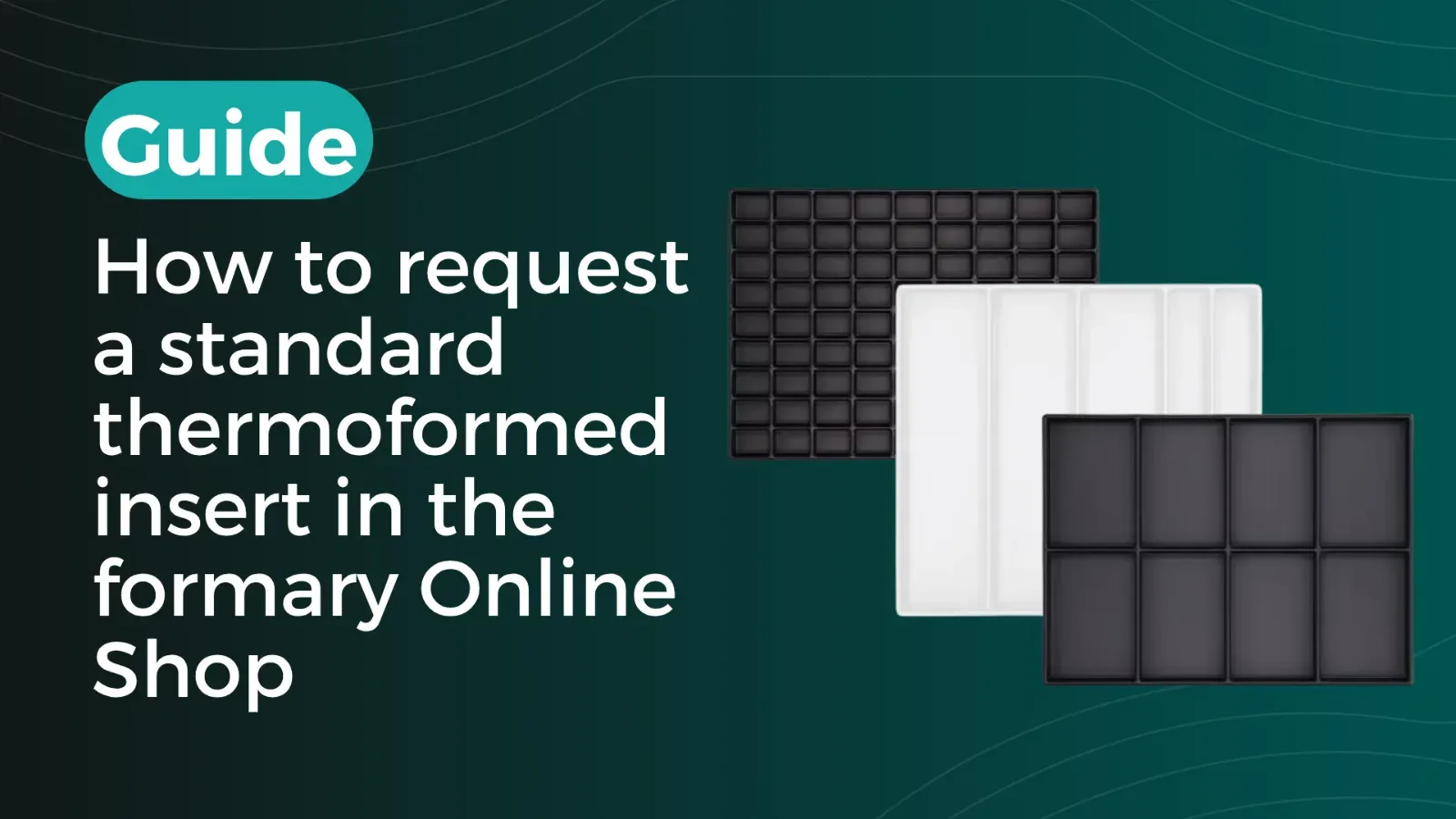
Ordering Standard Plastic Thermoformed Inserts: Step by Step for the formary Online Shop
Standard plastic thermoformed inserts are suitable for companies that want to equip SLCs or Euro containers quickly, without tooling costs and starting from small quantities. The formary Online Shop offers 220 ready-made inserts, including standard versions made from white PS and ESD-resistant versions made from conductive black PS. In this article, we show you step by step how to find suitable standard thermoformed inserts in the formary Online Shop.
News
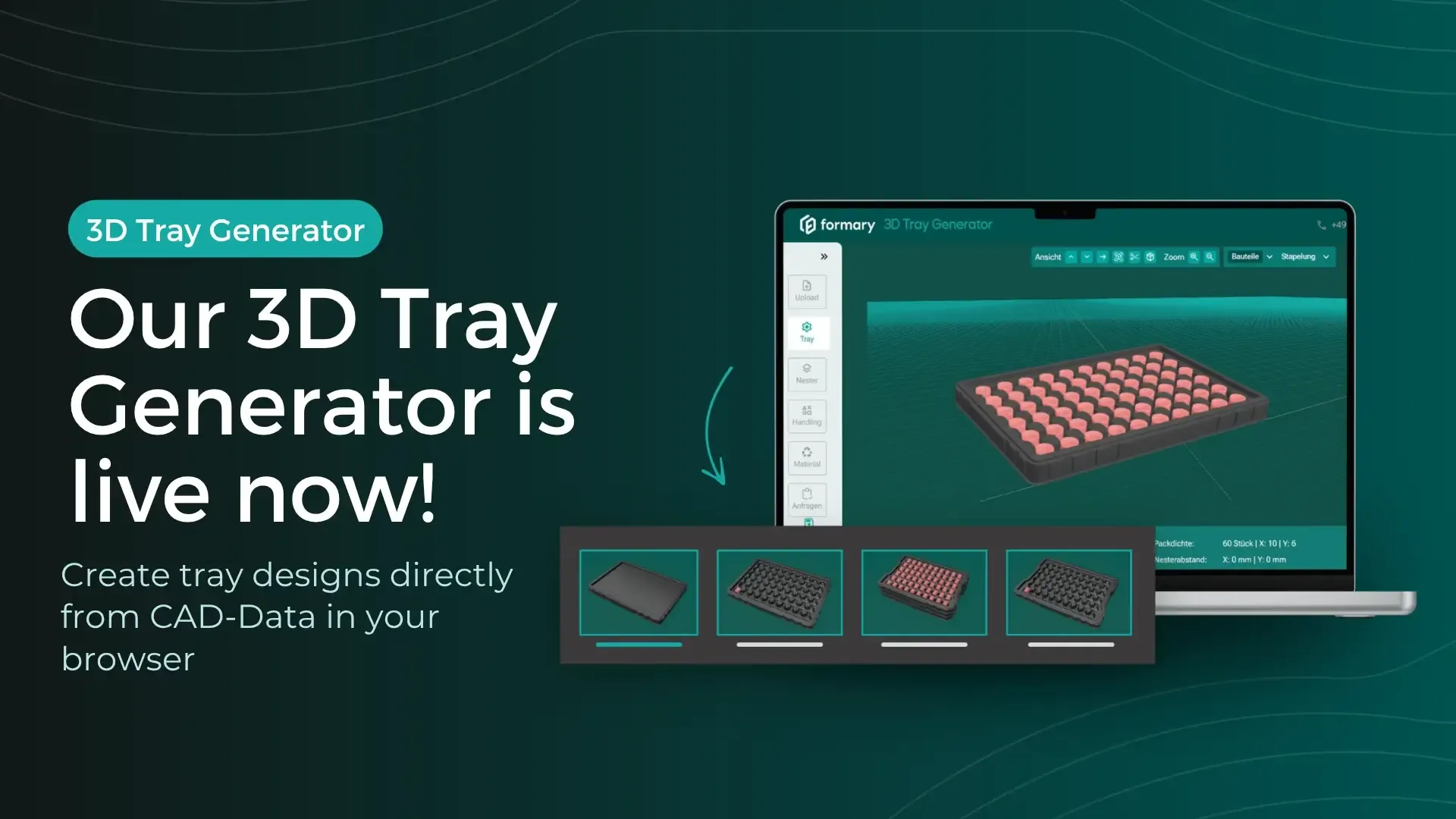
Now live: Create Tray Designs Directly from CAD Data in Your Browser
Planning plastic trays for transport, storage, or automated manufacturing processes often starts with one key question: what should a suitable tray for the component actually look like? This is exactly what the new web-based 3D Tray Generator answers within seconds. Learn more in this article.
Thermoformed Parts in Practice
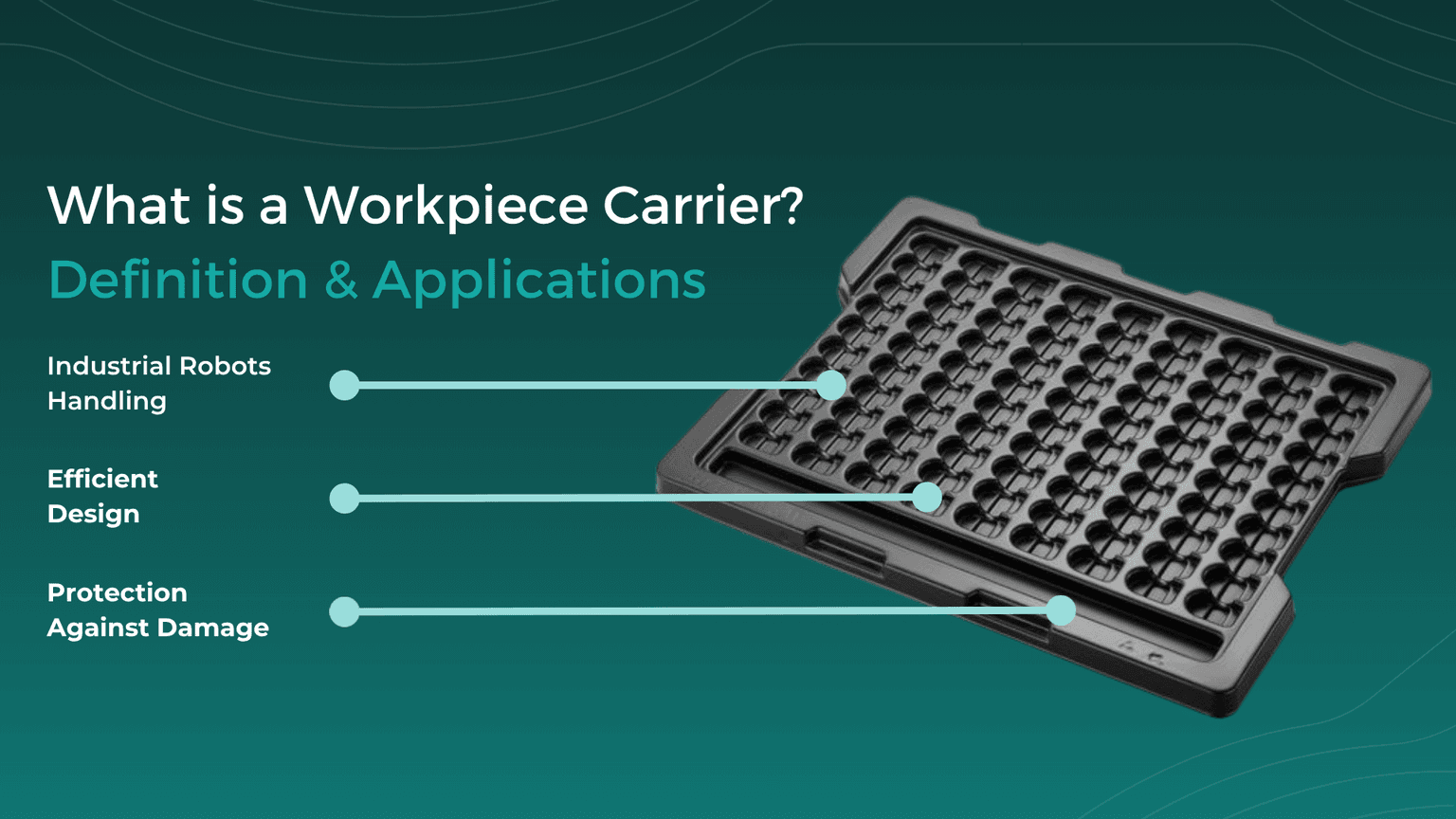
What Is a Workpiece Carrier? Definition & Applications
A constant challenge in the manufacturing industry is efficiently managing material flow throughout all assembly stages and departments. These logistical challenges can be optimally addressed by using product-specific workpiece carriers. Learn more in this article.
Platform & Features
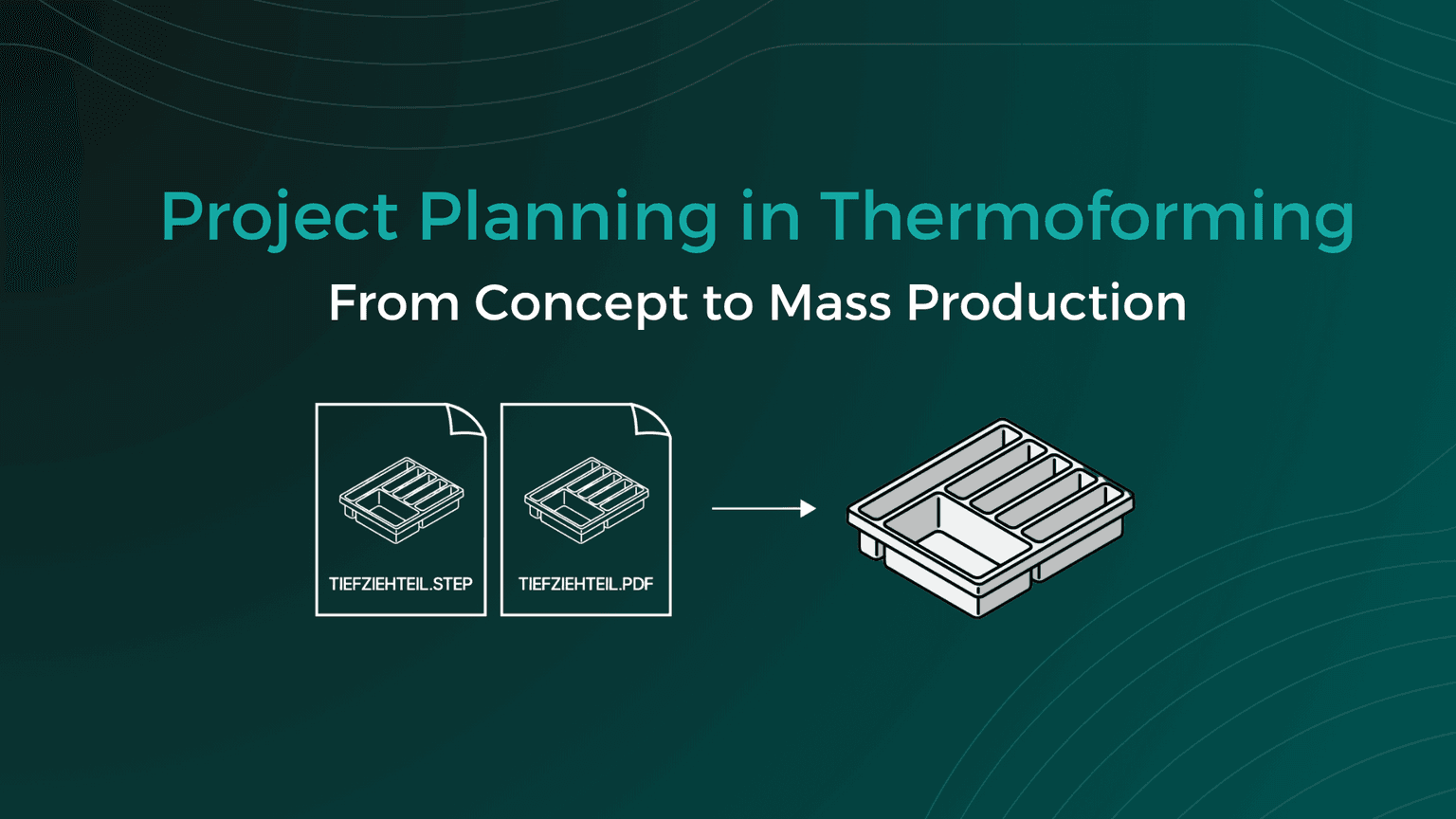
Project Planning in Thermoforming – From Concept to Mass Production
From the initial idea to mass production, various factors must be considered in thermoforming project planning, including material selection, tool manufacturing, and quality control. This article provides a detailed look at how a thermoforming project with formary is executed.
Thermoformed Parts in Practice
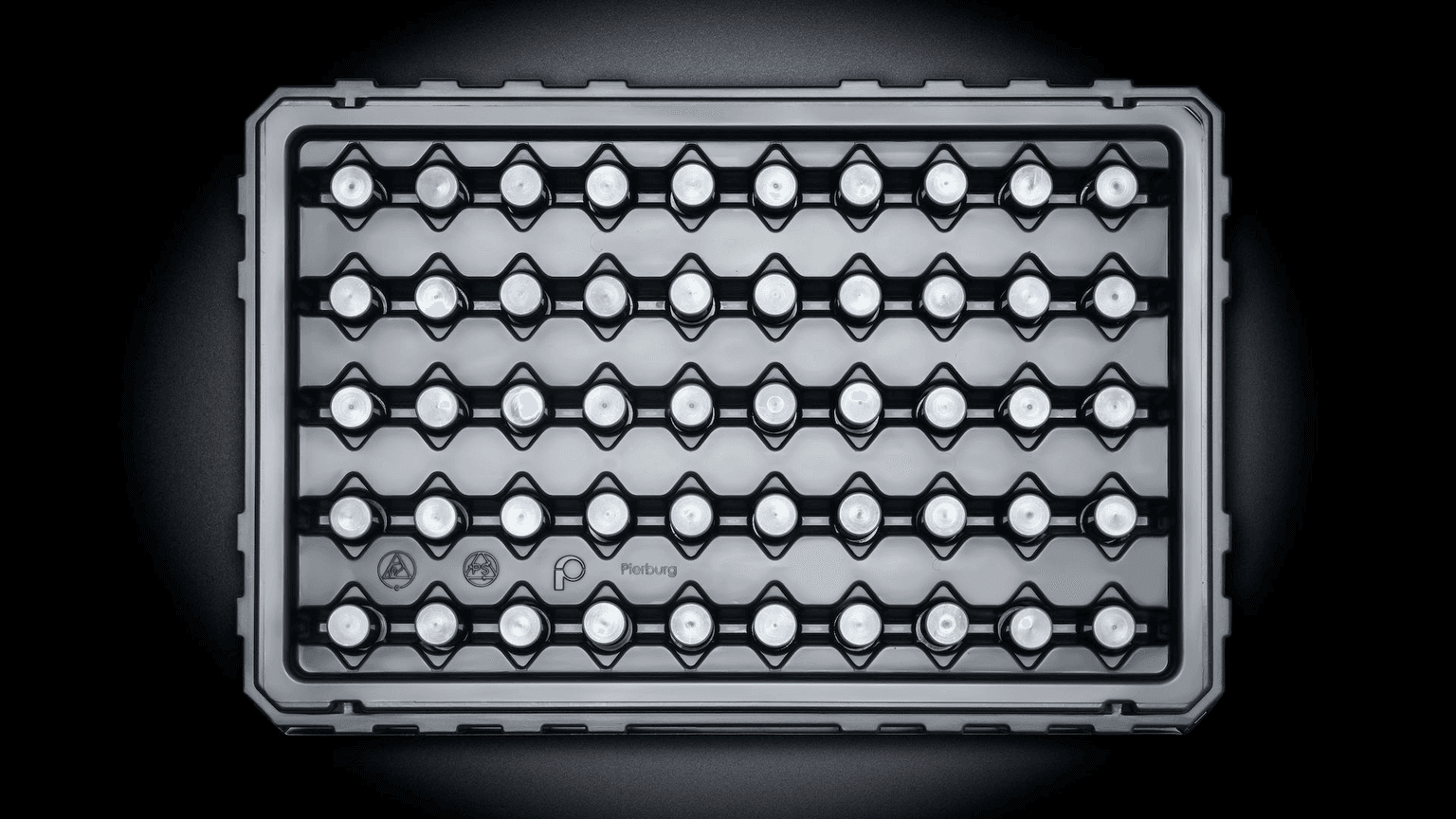
Automation of Production - How Trays Support Automation in Industry 4.0
Trays for automation are workpiece carriers that pass through an automated industrial system or production line, fulfilling various functions along the way.
Thermoformed Parts in Practice
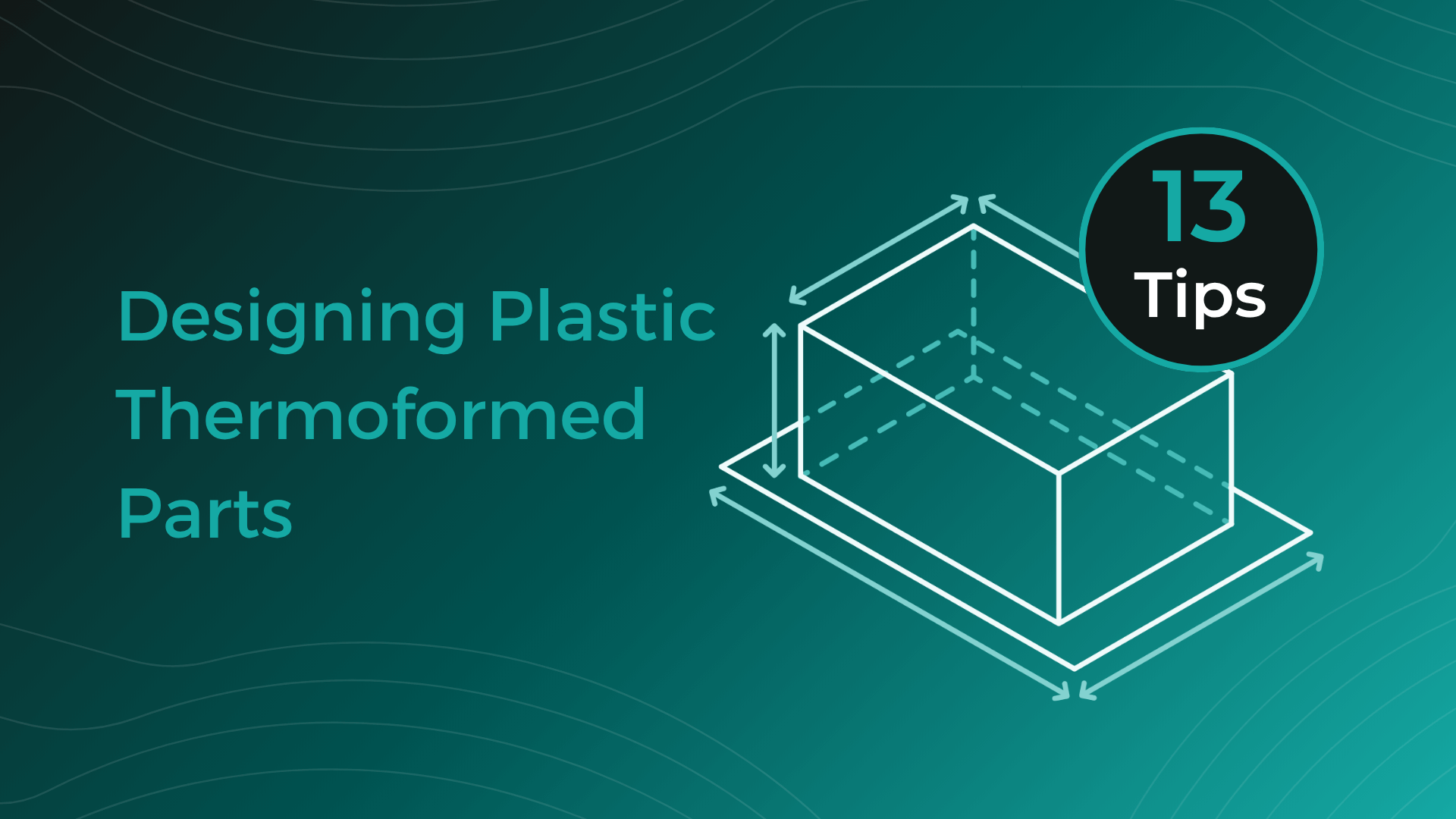
Design Guidelines for Plastic Thermoformed Parts – Top 13 Tips for Plastic-Optimized Construction
Plastic thermoforming is shaped by factors like material quality, temperature, pressure, speed, and tool geometry. With the right design principles, you can prevent errors in CAD and production. formary has gathered key tips to help you optimize your thermoformed parts.
Thermoformed Parts in Practice
Warehouse Inventory: Tips & Tricks for Better Warehouse Organization and Efficiency with Trays
Warehouse inventories cost time, tie up staff, and often disrupt ongoing operations. This is especially true for small parts, serial components, or recurring components, where counting quickly becomes confusing if parts are stored loose in boxes or shelf compartments. Standard trays create a simple yet effective structure here for better warehouse organization. This article shows how trays optimize inventory counts in both the warehouse and production.
Thermoformed Parts in Practice
Standard Trays vs. Custom Tray Solutions: Which Option Is Best for Your Project?
Anyone sourcing plastic trays for transport, storage, or production quickly faces the question: choose a standard tray from the catalog or have a custom solution developed by a thermoforming specialist? Both options have their place. The right choice depends on the component, quantity, budget, and project requirements. This article explains which option is the right one for you.