Unit Costs and Tooling Costs in Thermoforming: Cost Factors and Scalability
The costs in plastic thermoforming are a crucial factor for the economic efficiency and planning of a project. They depend on various influences along the process chain and change depending on production volume and requirements. This article explains how costs in plastic thermoforming are composed, how they develop with increasing quantities and when the process becomes particularly worthwhile.
Simon Andreß
Updated on August 26, 2026
Share
Relationship Between Unit Costs and Tooling Costs in Thermoforming – Key Facts at a Glance
The costs of thermoforming mainly consist of tooling, material, manufacturing, energy and labor costs
Tooling costs are incurred once and typically range between €800 and €10,000
Unit costs usually range between €0.20 and €15 per part depending on material, geometry and production volume. For particularly large or complex parts costs may be higher
As production volume increases unit costs decrease significantly especially when moving from very small batches to small series
Several cost factors interact in the production of thermoformed plastic parts. These determine both the total cost of a thermoforming project and how unit costs evolve with increasing production volume.
Cost Factors in Thermoforming
Composition of these factors
Tooling Costs
Concept, design and engineering of tooling data as well as milling and manufacturing of the thermoforming tool
Material Costs
Purchase price of plastic semi finished products such as sheets or films from manufacturers or suppliers
Manufacturing Costs
Machine hourly rate multiplied by the total production time
Energy Costs
Electricity costs for the machine as well as energy for automated processes and peripheral equipment
Labor Costs
Personnel costs for machine operation and manual processing steps
Tooling Costs as Initial Investment
Tooling costs in thermoforming are a one time initial investment. They occur at the beginning of a project and do not recur afterward. Typical thermoforming tools cost between approximately €800 and €10,000 depending on size, complexity and number of cavities. Higher costs usually result from more complex tool designs.
What Drives Tooling Costs?
Material, geometry and the machine for which the tool is designed also have a major influence. Additional components such as stacking systems or substructures can further increase the price. With increasing production volume these fixed costs are distributed over more parts which significantly reduces the tooling cost share per unit.
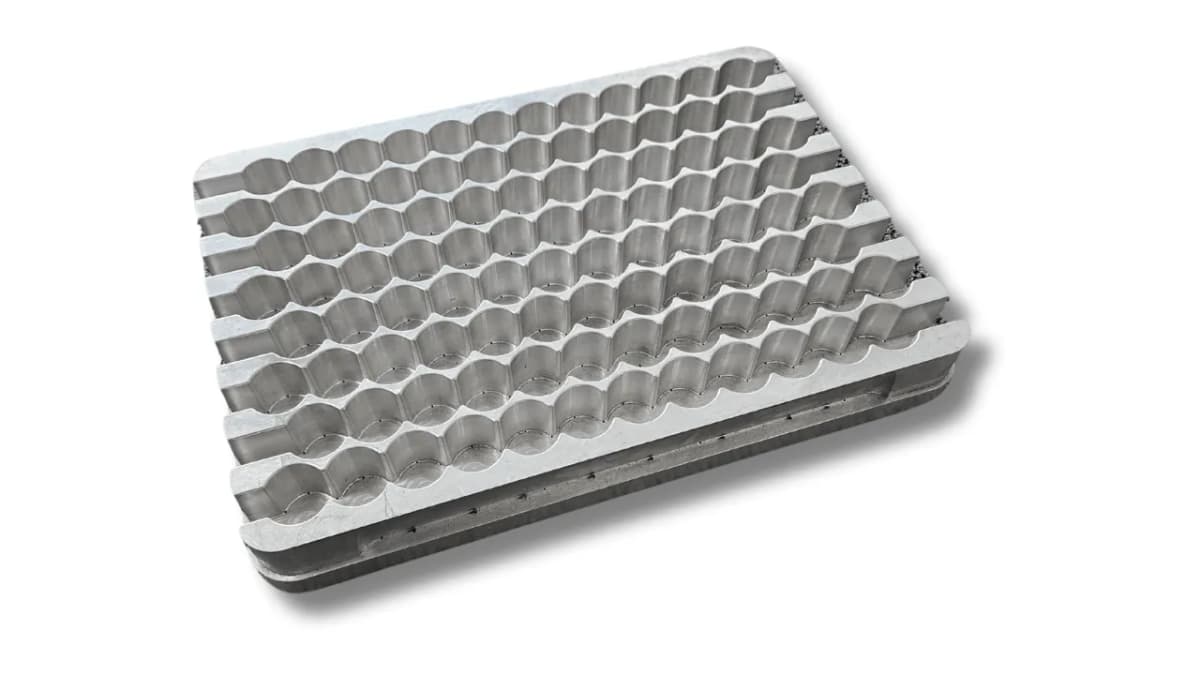
Aluminum production tool
💡 Once a tool has been manufactured, it can be reused for future production runs. When switching suppliers, it is also possible to transfer the existing tooling to the new supplier, helping to reduce costs. Learn more in our article on tooling transfer in thermoforming.
What Does a Thermoformed Part Cost per Unit?
Unit costs in thermoforming depend on several factors:
Material used
Initial material thickness
Part size and geometry
Degree of automation in production
Production quantity
etc
For standard trays, inlays and containers unit costs typically range between €0.20 and €15 per piece. For large housings or heavily post processed parts costs can be significantly higher. The exact price depends on the specific project and part requirements
How Costs Develop with Increasing Production Volume
As production volume increases unit costs in thermoforming decrease. Machine downtime is spread over more parts and automated processes enable higher output per hour.
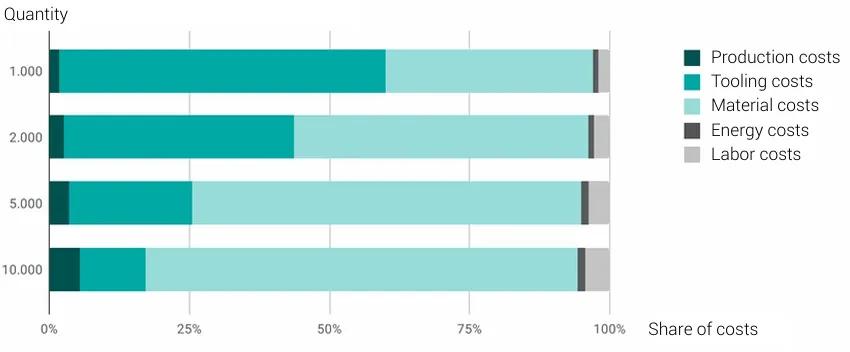
At the same time the cost structure changes. In smaller series tooling costs make up a large share. In larger series material costs become the dominant factor.
💡 Example: At around 1,000 units tooling costs may account for about 60 percent of total costs
At 10,000 units their share often drops to around 10 percent while the share of material costs increases accordingly.
Unit Cost Reduction Between Small and Medium Series
The greatest reduction in unit costs typically occurs when moving from very small quantities to small series. Even the step from a micro series of less than 10 parts to a small series of less than 100 parts can bring significant cost advantages.
Another economic leap often occurs when transitioning to medium series with up to approximately 5,000 parts as materials can often be sourced more cost effectively. In large series unit costs usually decrease only slightly and only minor optimizations remain.
Less post processing since colored plastic sheets often eliminate the need for painting.
Large parts from a single tool since sheets up to approximately 4,000 × 3,000 mm enable large thin walled parts.
Economical even for small series since low tooling costs allow a cost efficient project start.
Fast and cost effective prototyping since tools made from Ureol or 3D printing enable quick prototypes and sample parts.
💡 If you'd like to compare thermoforming with other plastic processing methods, you'll find a clear comparison of the most common methods in our article "Plastic manufacturing processes compared".
High Scalability in Series Production
An often underestimated advantage of thermoforming is its long term scalability. Once the tool is available production can be scaled almost indefinitely. The initial tooling investment becomes less significant with each additional unit produced.
As a result costs per part continuously decrease with increasing production volume which makes the process especially attractive for projects that grow after market entry.
Conclusion
Thermoforming is an economically attractive process especially for projects that start with smaller series and later scale. Tooling costs are a one time and manageable investment and unit costs decrease significantly as production volume increases
Anyone who considers costs early and plans for volume growth can use thermoforming strategically and fully leverage its economic advantages. If you have further questions feel free to contact us. We are happy to help.
Frequently Asked Questions About Unit and Tooling Costs in Thermoforming
A simple project can be delivered in under 6 weeks. Prototype tools for example via 3D printing can often be ready within a few days.
Further Resources
Thermoformed Parts in Practice
Warehouse Inventory: Tips & Tricks for Better Warehouse Organization and Efficiency with Trays
Warehouse inventories cost time, tie up staff, and often disrupt ongoing operations. This is especially true for small parts, serial components, or recurring components, where counting quickly becomes confusing if parts are stored loose in boxes or shelf compartments. Standard trays create a simple yet effective structure here for better warehouse organization. This article shows how trays optimize inventory counts in both the warehouse and production.
Thermoformed Parts in Practice
Tray Labeling: How to Use Labels Effectively for Your Packaging
To ensure that trays can be correctly identified and used, clear labeling is essential. Depending on the application, quantity, and process requirements, different methods can be used, such as permanent engraving or flexible labels. In this article, you will learn which tray labeling methods are available, when each method makes sense, and how labeling can already be incorporated into the tray design using formary’s 3D Tray Generator.
Thermoformed Parts in Practice
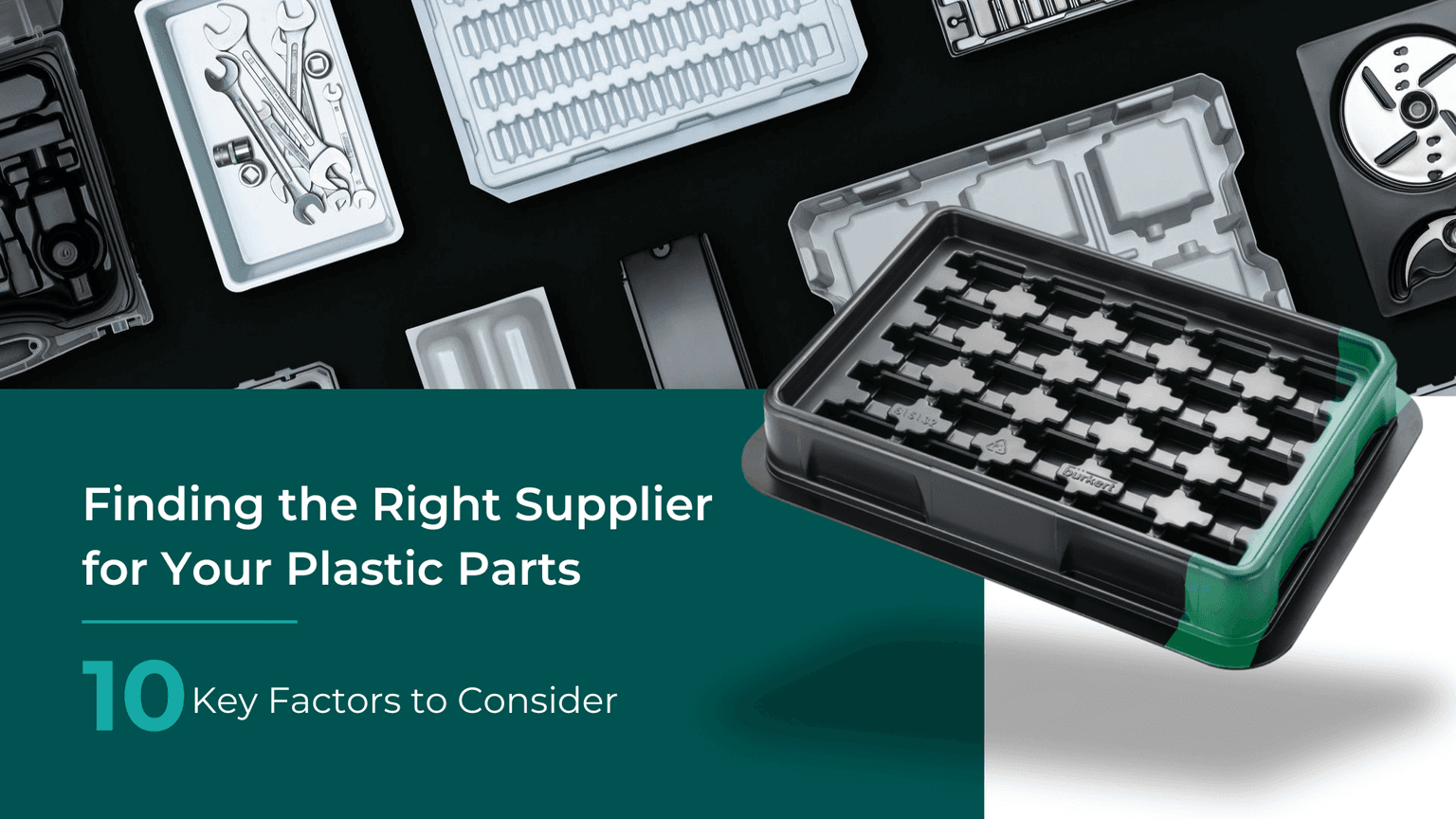
Supplier Guide for Plastic Thermoformed Parts – 10 Key Factors That Matter
Choosing the right supplier for plastic thermoformed parts is crucial for the quality, efficiency, and cost-effectiveness of your production. Our 10 tips will show you what to look for when selecting a supplier.
Platform & Features
3 Factors That Accelerate Your Procurement with formary
The three key factors—time, speed, and efficiency—are crucial for success in industrial manufacturing, from inquiry to delivery. That’s why formary has optimized this process, significantly accelerating the procurement of plastic thermoformed parts. Learn more in this article.
Thermoformed Parts in Practice
Rapid Prototyping in Thermoforming – Definition, Benefits & Processes
Rapid prototyping is used in product development to quickly create preliminary models. In thermoforming, rapid prototyping offers numerous advantages for producing high-quality prototypes efficiently and cost-effectively.
Platform & Features
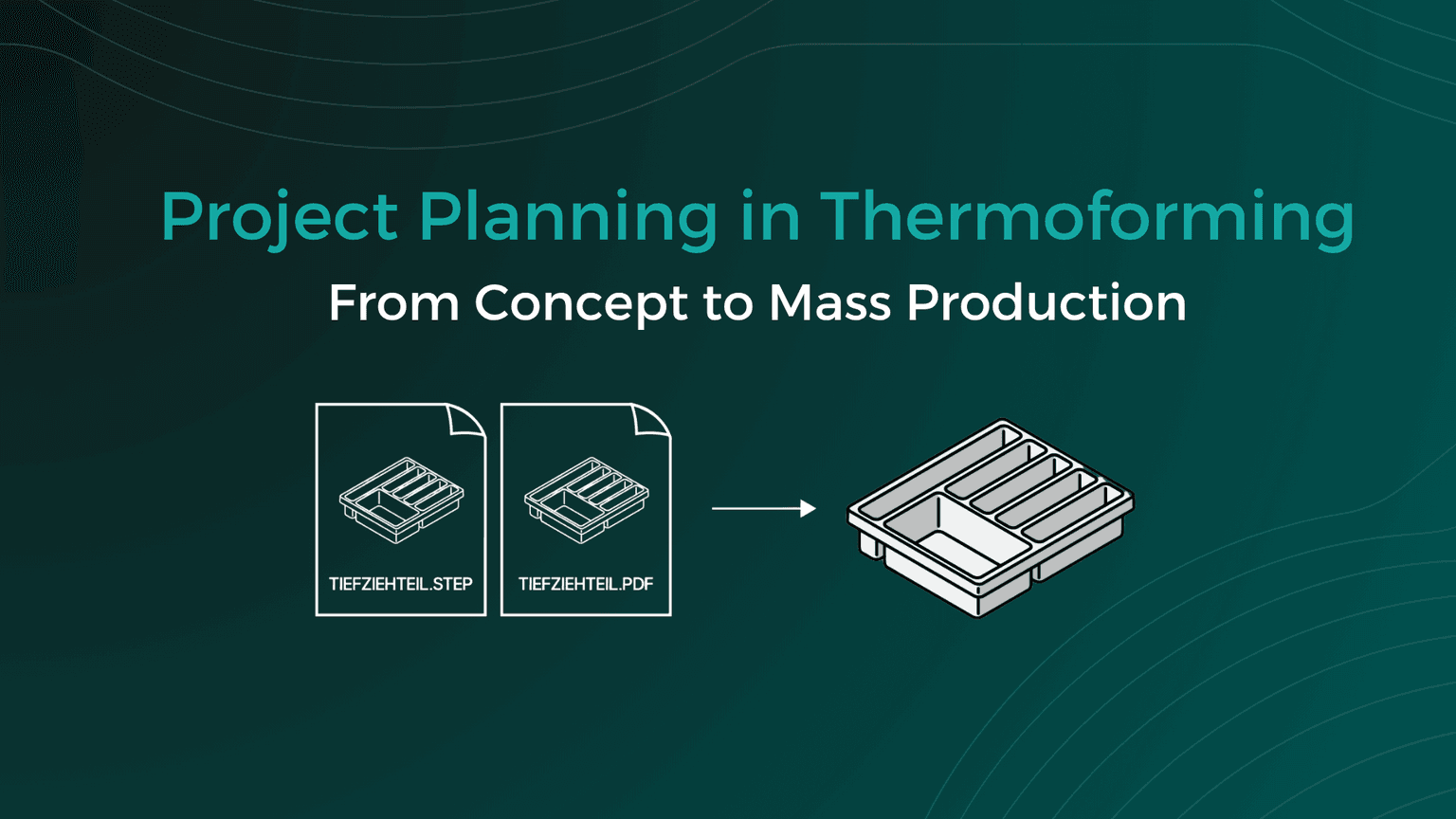
Project Planning in Thermoforming – From Concept to Mass Production
From the initial idea to mass production, various factors must be considered in thermoforming project planning, including material selection, tool manufacturing, and quality control. This article provides a detailed look at how a thermoforming project with formary is executed.
Thermoformed Parts in Practice
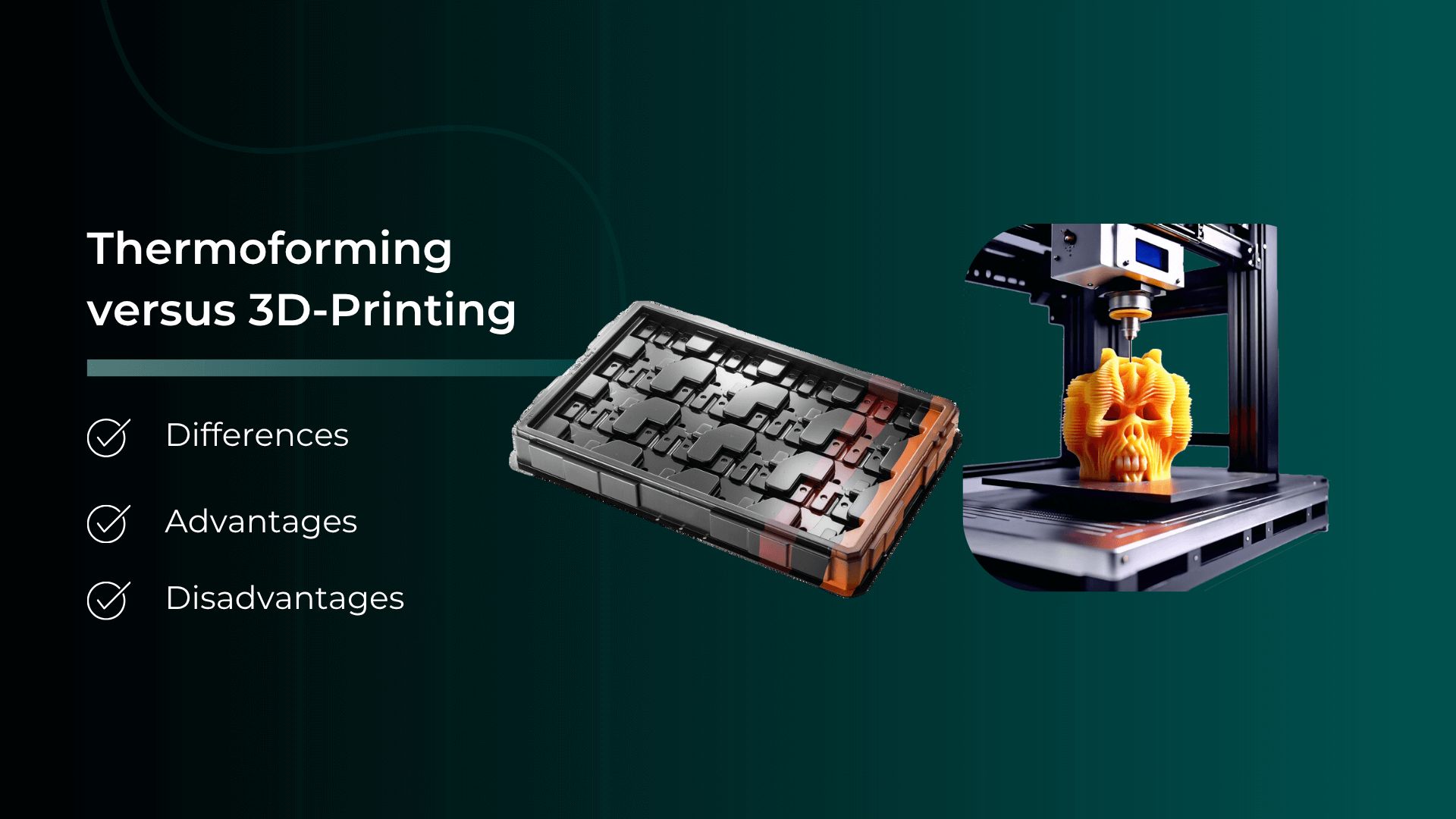
Thermoforming vs. 3D Printing – Advantages, Disadvantages, Differences, and Similarities
Plastic parts are manufactured using various processing methods. In this article, we focus on comparing the processes of plastic thermoforming and 3D printing.
Thermoformed Parts in Practice
Injection Molding vs. Plastic Thermoforming – Advantages, Disadvantages, Differences, and Similarities
In the world of plastic processing, there are various common manufacturing methods used to produce precise plastic components for industrial applications. We compare two of them: Injection Molding and Plastic Thermoforming.
Thermoformed Parts in Practice
Checking CAD Models for Thermoformability: The Designer's Guide
Whether a plastic part is thermoformable is determined in the CAD model. Anyone who discusses geometry, wall thicknesses, and demoldability only after the first sampling pays for this loop with tool modifications, material waste, and lost weeks in the project timeline. This can be avoided during design: with a structured check that evaluates each model along this guide and makes typical sources of error visible early on.