

Plastic deep-drawing for small and large series | Prototype & production runs | New plastic, recycled materials, and compounds | deep-drawn enclosures and covers | Plastic blisters, inlays, containers | Deep-drawn workpiece holders and load carriers | Plastic thermoforming, Vacuum deep-drawing
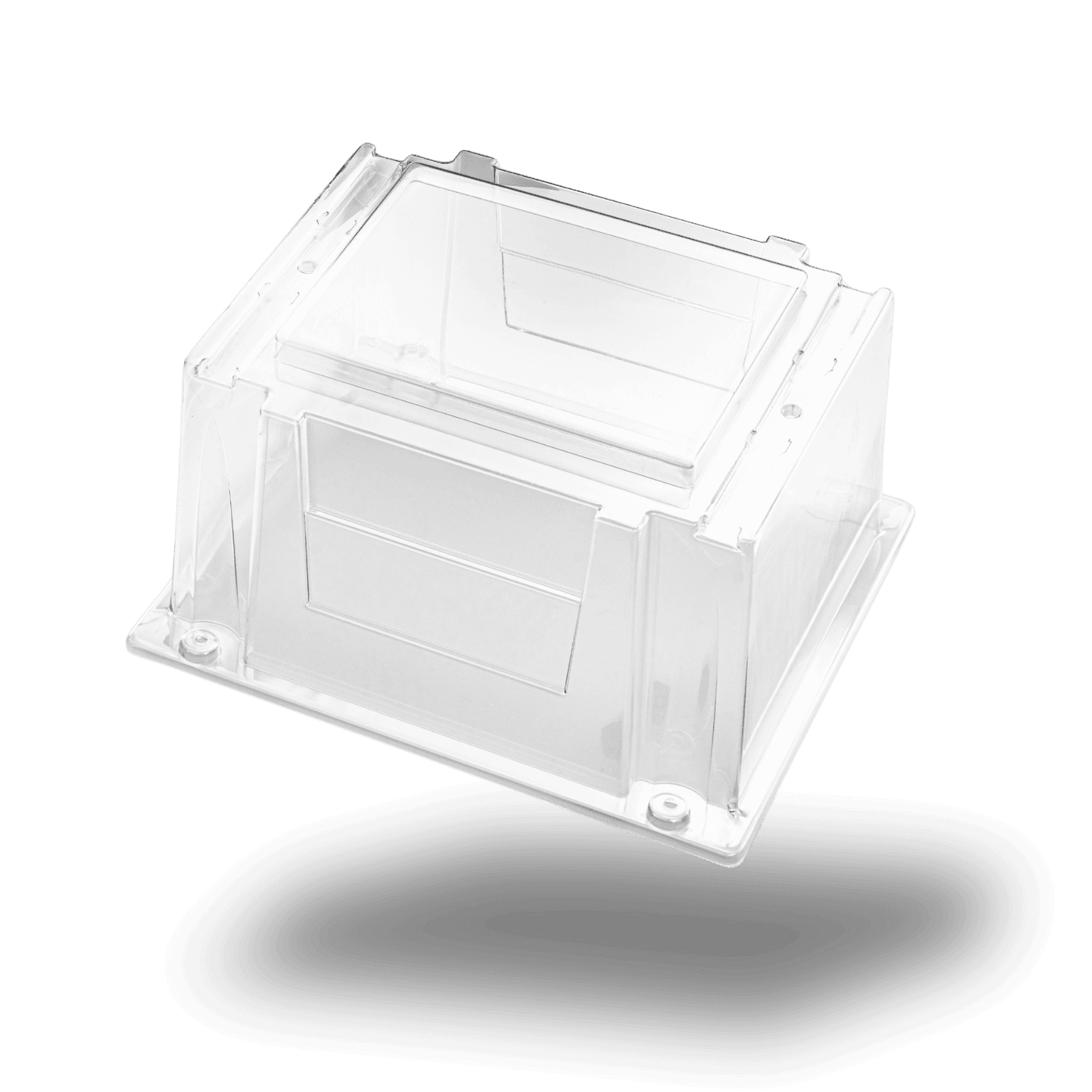
Plastic thermoforming is known by various names: plastic thermoforming, thermoforming, vacuum thermoforming, vacuum forming, and vacuum molding. In this process, a thermoplastic plastic sheet or film is heated and shaped in a mold to create specific geometries. The thermoforming process allows for the quick and cost-effective production of lightweight yet durable components.
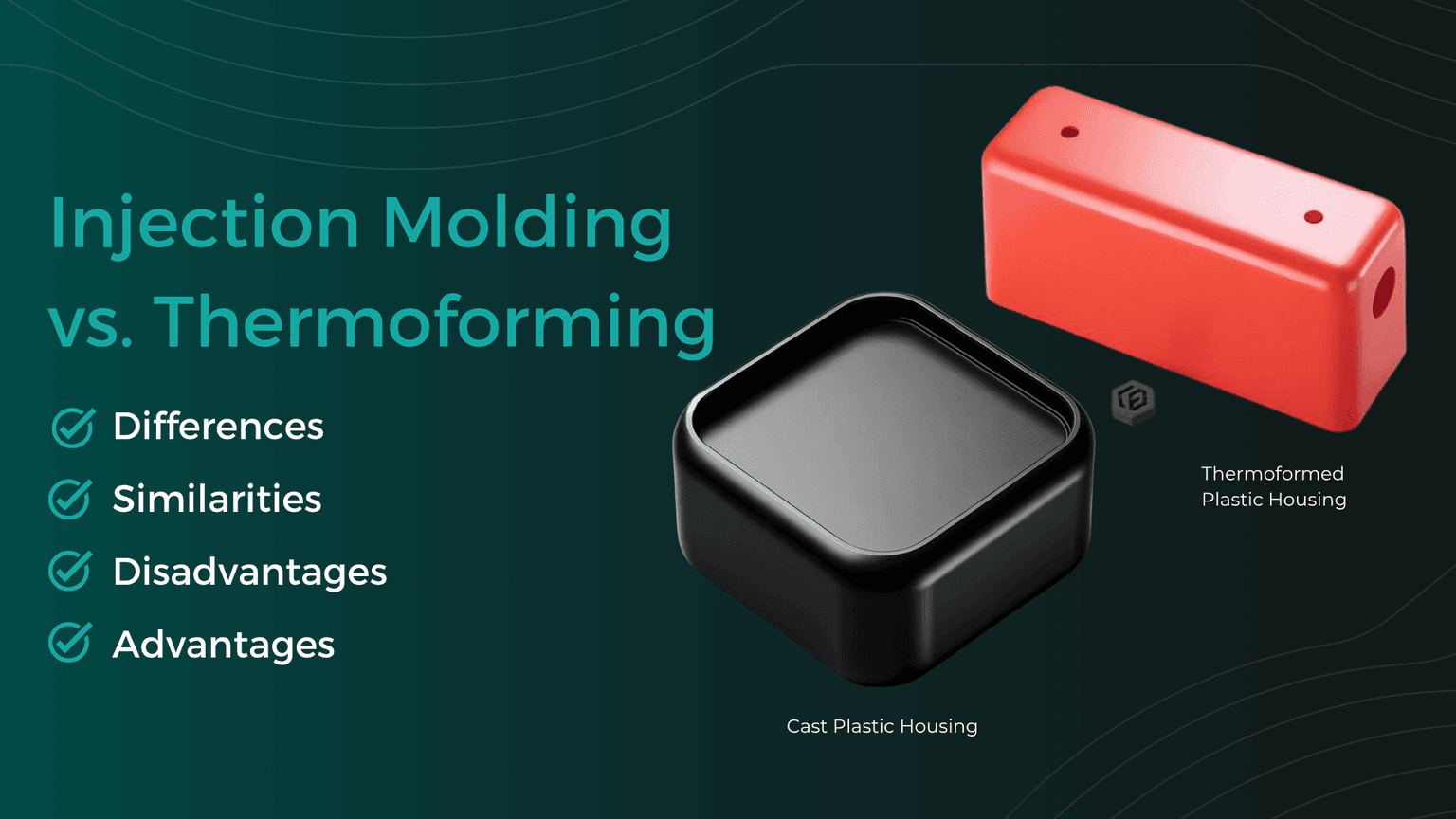
As an alternative to injection molding, plastic thermoforming stands out primarily due to its low tooling costs. This makes it possible to produce smaller series starting from 100 pieces with a lower initial investment. Compared to 3D printing, plastic thermoforming offers significantly lower per-unit costs.
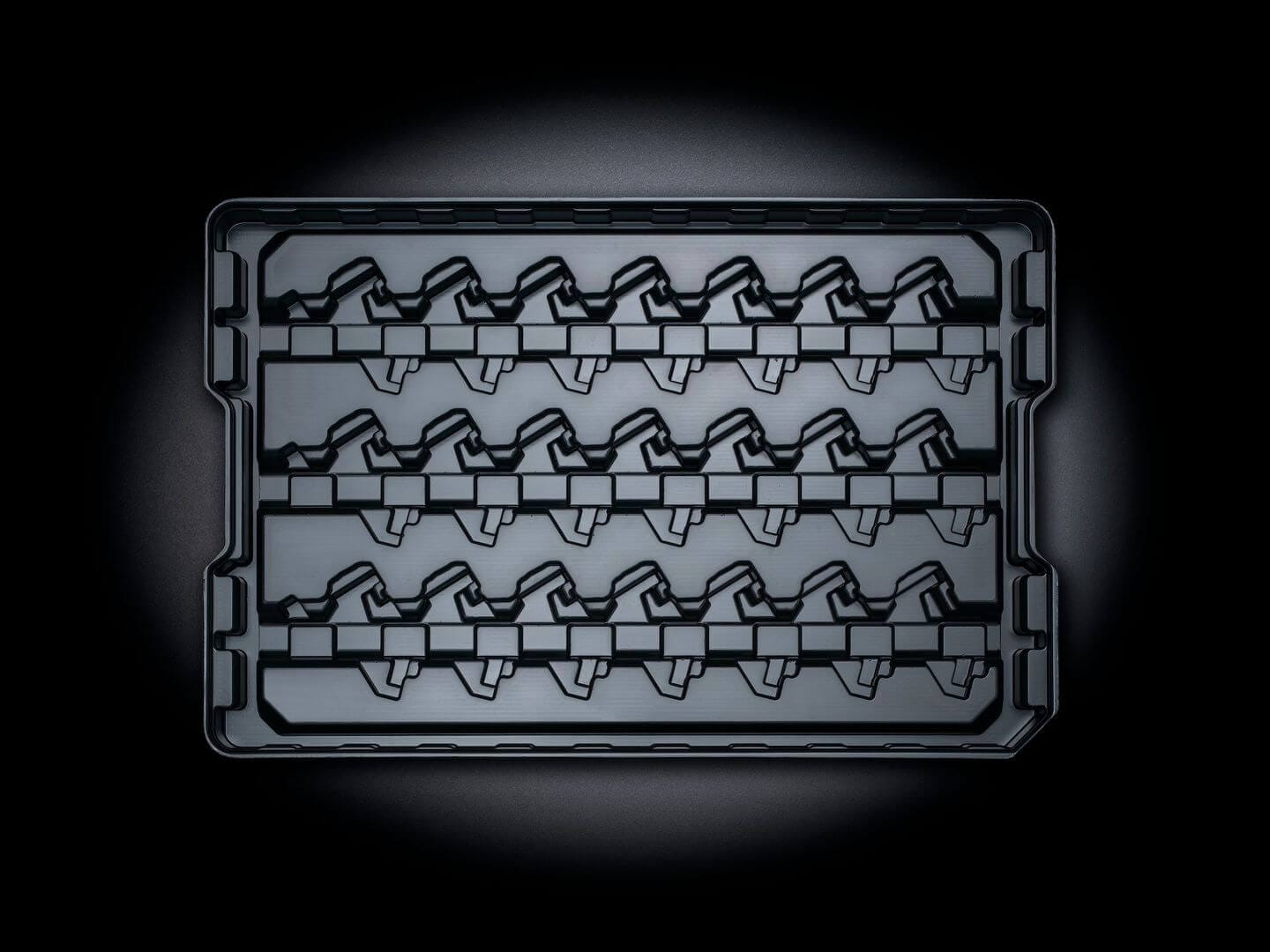
formary provides plastic thermoformed parts for a variety of applications. Using the thermoforming process, custom plastic products are produced according to customer specifications.
Thermoforming plastic is unrivaled, especially for medium-sized series with tight lead times. Thermoforming combines fast implementation with cost-efficient tools and a wide variety of materials.
Developments in machine and material technology in recent years have led to plastic thermoforming increasingly replacing other applications and processes:
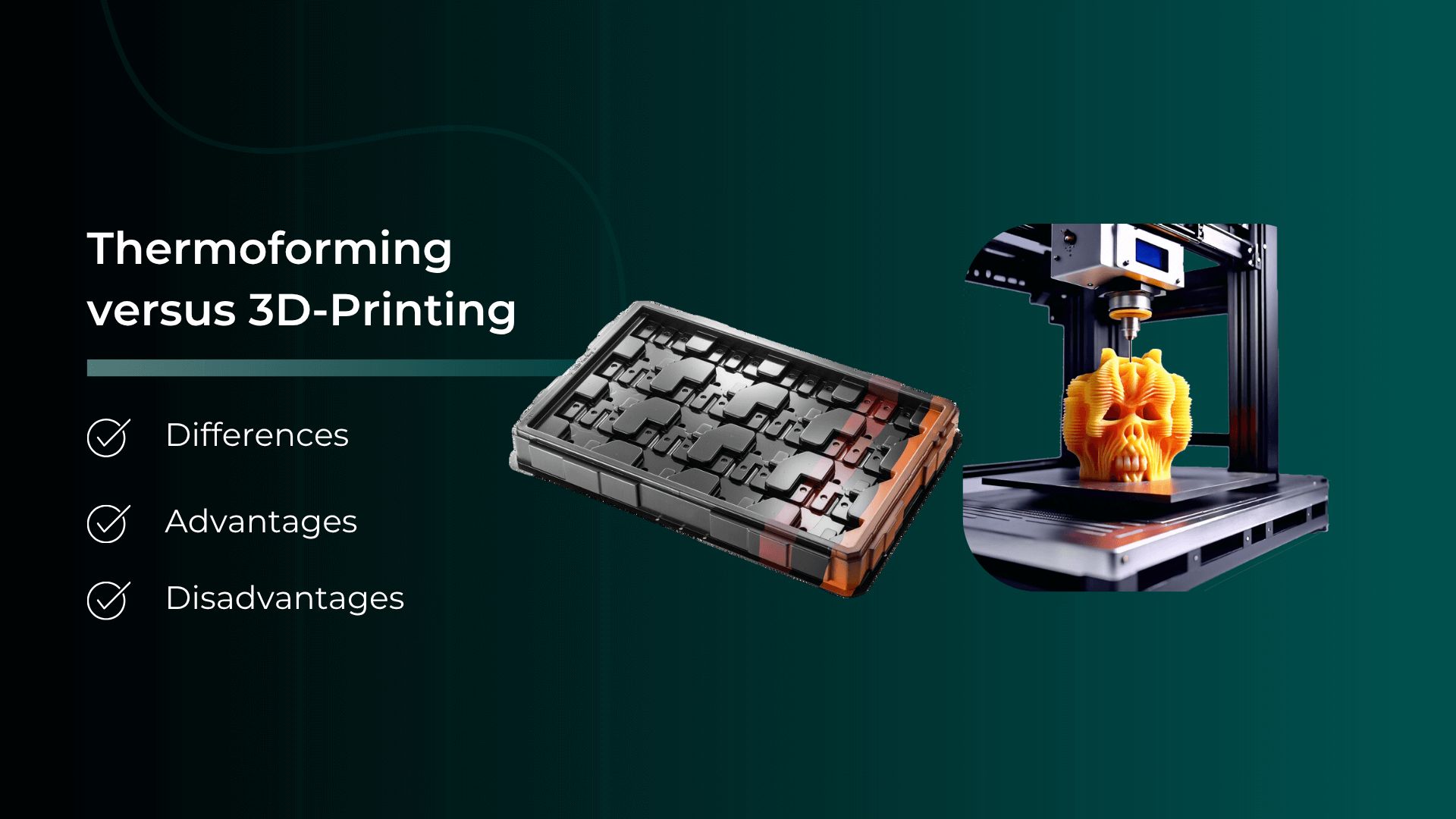
This makes thermoforming the “go-to” process between 3D printing (flexible, expensive) and injection molding (cost-effective for series production, high start-up costs).
Plastic thermoforming allows small series, including tool manufacturing, to be completed in as little as 2 weeks.
Compared to injection molding, tools for plastic thermoforming are significantly more affordable.
Plastic thermoforming is ideal for smaller quantities starting from a few hundred units.
A broad range of plastics, recyclates, color options, material thicknesses, and mechanical properties are available for thermoforming.
Plastic thermoforming offers various options for rapid prototyping or quick production of sample series.
Tolerance dimensions for thermoformed plastic products can meet DIN and ISO standards in many applications.
Two manufacturing methods are used in plastic thermoforming. The choice of method depends on the specific application.

Here’s how the project works with formary to create your custom thermoformed product.
Choose your custom thermoformed part’s application case using the formary configurator.
During the guided process, provide all necessary thermoforming requirements for your plastic part.
You will receive a quote within 24 hours for your thermoformed part, including tiered pricing and tooling costs.
An experienced project manager will review your request for thermoformability and suggest optimizations.
The matching algorithm assigns your thermoformed part to the ideal thermoformer. The thermoforming process begins immediately.