Guide: Top 5 Tips for Cost Reduction in Thermoforming
Costs in plastic thermoforming are primarily determined by design, material selection, and tooling design. Many cost drivers are not immediately apparent and often only become visible late in the development process. This is precisely where unnecessary costs frequently arise, costs that can be avoided with the right measures.
Simon Andreß
Updated on August 26, 2026
Share
Reducing Costs in Thermoforming - Key Points at a Glance
Part design, material selection and mold design are the most effective ways to reduce costs
Production-optimized design sustainably lowers unit costs
Reduced material usage directly minimizes costs
Efficient molds improve cost-effectiveness
Early consideration during the development phase is crucial
For many companies, the biggest cost drivers in thermoforming are not immediately apparent. Especially without experience in design and tooling, they often only become visible once adjustments are already requiring significant effort and incurring additional costs.
In addition to material usage, tool complexity and the associated process steps play a particularly important role. It is often underestimated that even small adjustments in the design can have a major impact. This is precisely where the greatest potential lies for reducing costs in thermoforming. We support you in designing your components to be cost-optimized from the very beginning.
5 Tips for Reducing Costs in Thermoforming
These tips can be considered right from the start of your project to keep the total cost of your plastic thermoformed parts as economical as possible.
💡 Do you already have tooling but want to switch suppliers to reduce costs? formary also makes tooling transfers easy.
The choice of material also determines the costs involved in thermoforming. Therefore, you should:
Select materials consciously and according to your needs
Use pre-colored semi-finished products
Reduce material usage through intelligent design
In the following sections, we explain these steps in detail.
1. How Does Producing Multiple Parts per Tool Reduce Costs?
Producing multiple parts per tool increases output per cycle and can therefore reduce unit costs.
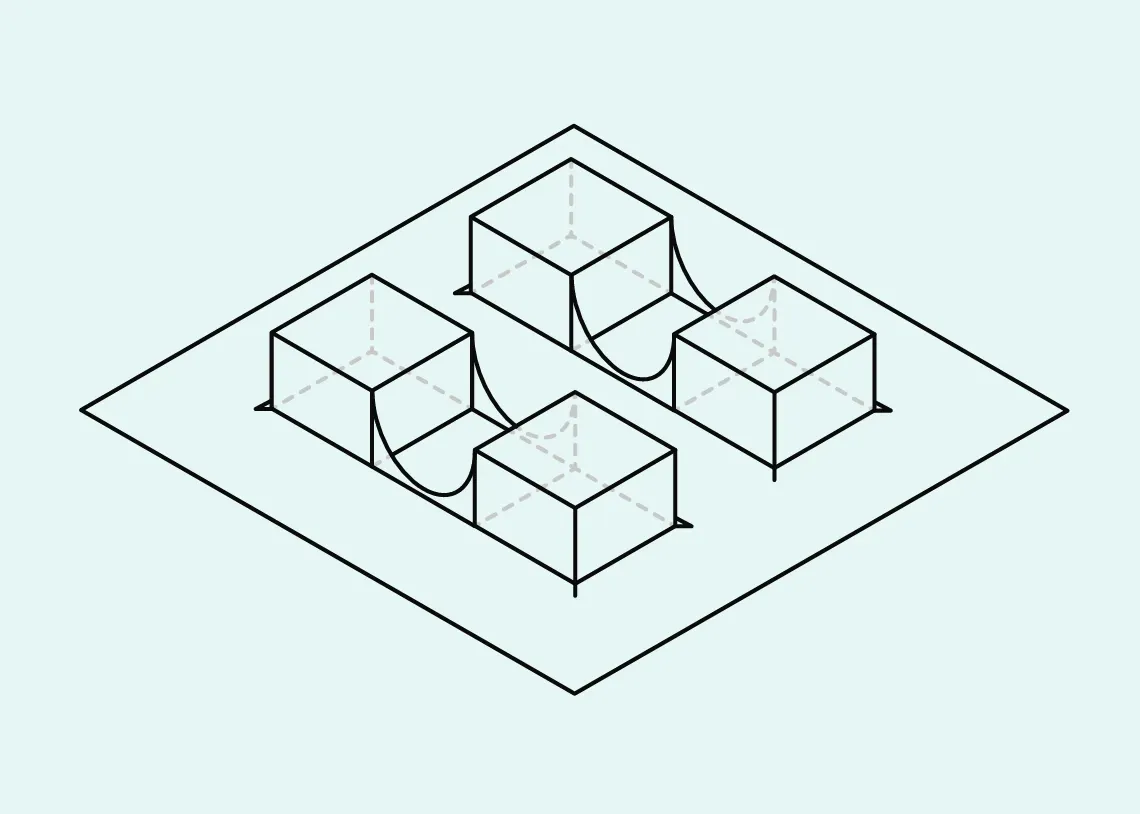
An effective way to reduce unit costs is the efficient use of the mold. The goal is to achieve the highest possible output per cycle. Multi-cavity molds are standard practice in thermoforming and allow for the simultaneous production of multiple identical components. However, combining different components in a single mold also offers significant savings potential. See how we use multi-cavity molds in our case study with NAEXT.
Graphical depiction of a multi-purpose tool
2. Why Do Moving Tool Components Increase Costs?
Moving tool components increase tooling complexity and maintenance requirements, resulting in higher thermoforming costs.
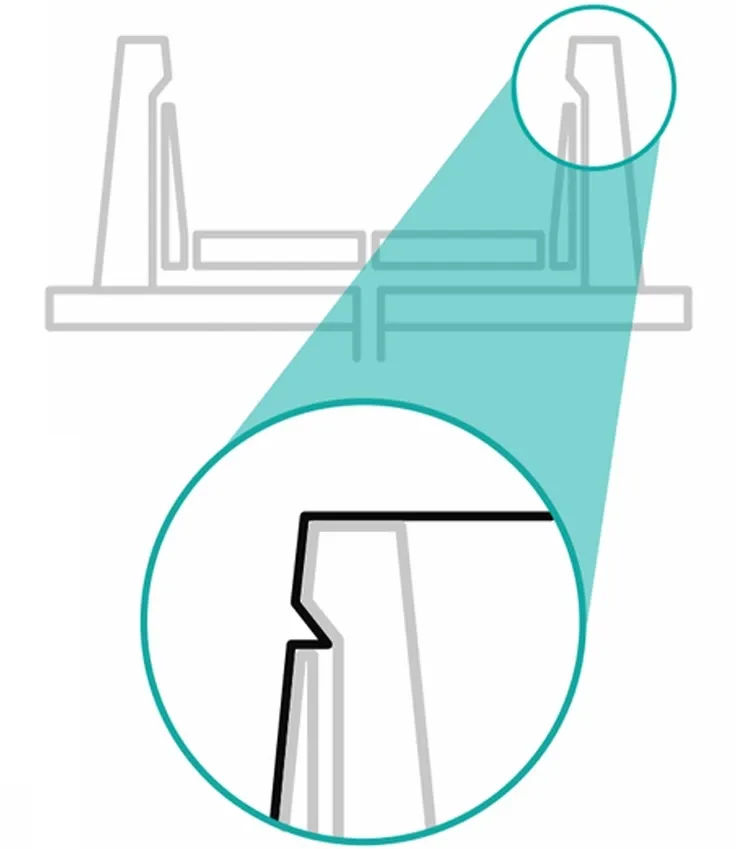
Complex part geometries, particularly undercuts, require the use of moving elements in the tool. These significantly increase thermoforming costs and maintenance requirements.
Therefore, you should check during the design phase whether the workpiece can be adapted to eliminate this complexity.
Typical optimizations include:
Eliminating undercuts
Adjusting draft angles
Simplifying the geometry
Depiction of a undercut
💡 Undercuts are made possible by retractable elements in the mold. The mold is equipped with sliders that “fold away” during demolding (flap mold). This makes the demolding process more complex and the mold more expensive. Therefore, they should always be kept to a minimum.
3. How Does Material Selection Affect Costs?
Selecting a material based on the actual requirements prevents unnecessary overengineering and enables a more cost-effective solution with the same functionality.
A common mistake in practice is selecting a material that offers more capabilities than are actually necessary. This so-called “oversizing” unnecessarily leads to higher costs in thermoforming. Instead, material selection should consistently follow the bottom-up principle: Choose exactly the material that precisely meets the requirements.
This ensures a more economical solution with the same functionality.
4. Why Does Pre-Colored Sheet Material Save Costs Compared With Painting?
Pre-colored sheet material can eliminate the need for subsequent painting, avoiding an additional process step and the associated costs.
Post-painted plastic tray
In many projects, coloring is performed later in the process, such as through plastic painting. This adds an extra step that costs time and money.
If pre-colored semi-finished products are used instead, this step can be eliminated. However, this requires that the quantities and the supply chain allow for such procurement.
5. How Can Material Usage Be Reduced Without Compromising Functionality?
Reinforcement structures such as ribs can maintain part stability despite reduced material thickness, lowering material consumption and unit costs.
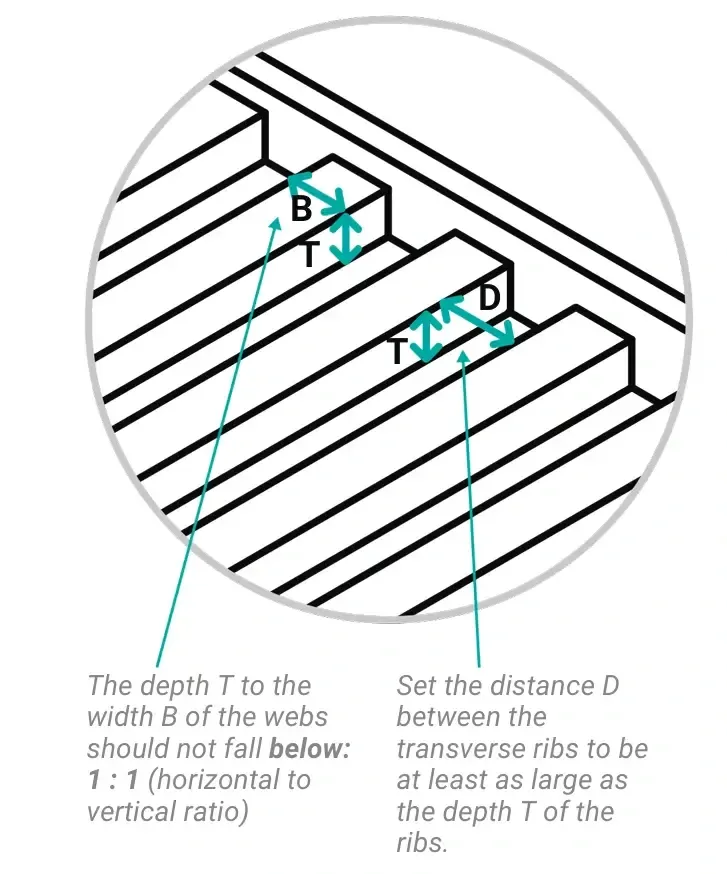
Material is one of the biggest cost factors in thermoforming. That’s why it’s particularly worthwhile to focus on this area. Through clever design, material thickness can be reduced without compromising stability. Reinforcing structures such as ribs are often used for this purpose.
Typical benefits include:
Lower material consumption
Lower unit costs
Consistent component quality
💡 When adding ribs or struts, keep the following in mind: Too many closely spaced transverse ribs negatively affect the aspect ratio and the distance between individual transverse ribs must be at least as great as their depth.
When optimizing material thickness and part geometry, the dimensional tolerances that can be achieved in the manufacturing process must also be taken into account. Find out more in our guide to tolerances in plastic thermoforming.
Conclusion: Reducing costs in thermoforming starts with the right design
The greatest potential for cost savings in thermoforming doesn’t arise during production, but rather during the development and design phase. By focusing early on material-efficient design, simple geometries, and tool-friendly construction, you lay the foundation for consistently low unit costs.
Tip: With our DfM analysis software, we check your data for thermoformability and determine the best cost-benefit ratio for you.
Frequently Asked Questions About Cost Reduction in Thermoforming
A multi-cavity mold or mold optimization is particularly worthwhile for medium to high production volumes. As production volume increases, the investment costs are spread out more effectively, while more efficient molds and shorter cycle times significantly reduce unit costs.
The total costs in thermoforming consist primarily of tooling costs, material costs, and manufacturing costs. Energy costs and labor costs are also included. Depending on the component and quantity, these components can vary in their relative importance.
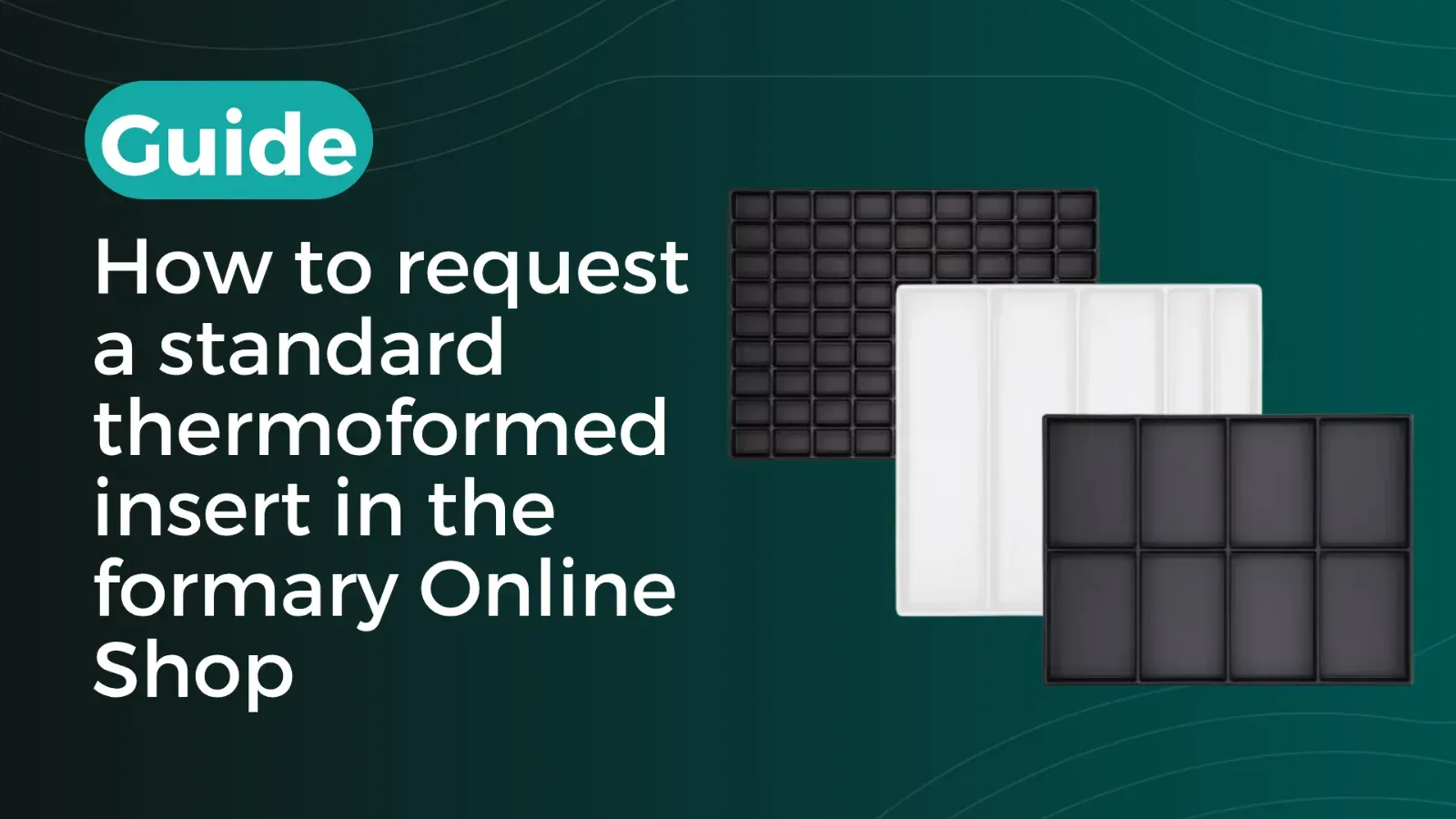
Ordering Standard Plastic Thermoformed Inserts: Step by Step for the formary Online Shop
Standard plastic thermoformed inserts are suitable for companies that want to equip SLCs or Euro containers quickly, without tooling costs and starting from small quantities. The formary Online Shop offers 220 ready-made inserts, including standard versions made from white PS and ESD-resistant versions made from conductive black PS. In this article, we show you step by step how to find suitable standard thermoformed inserts in the formary Online Shop.
News
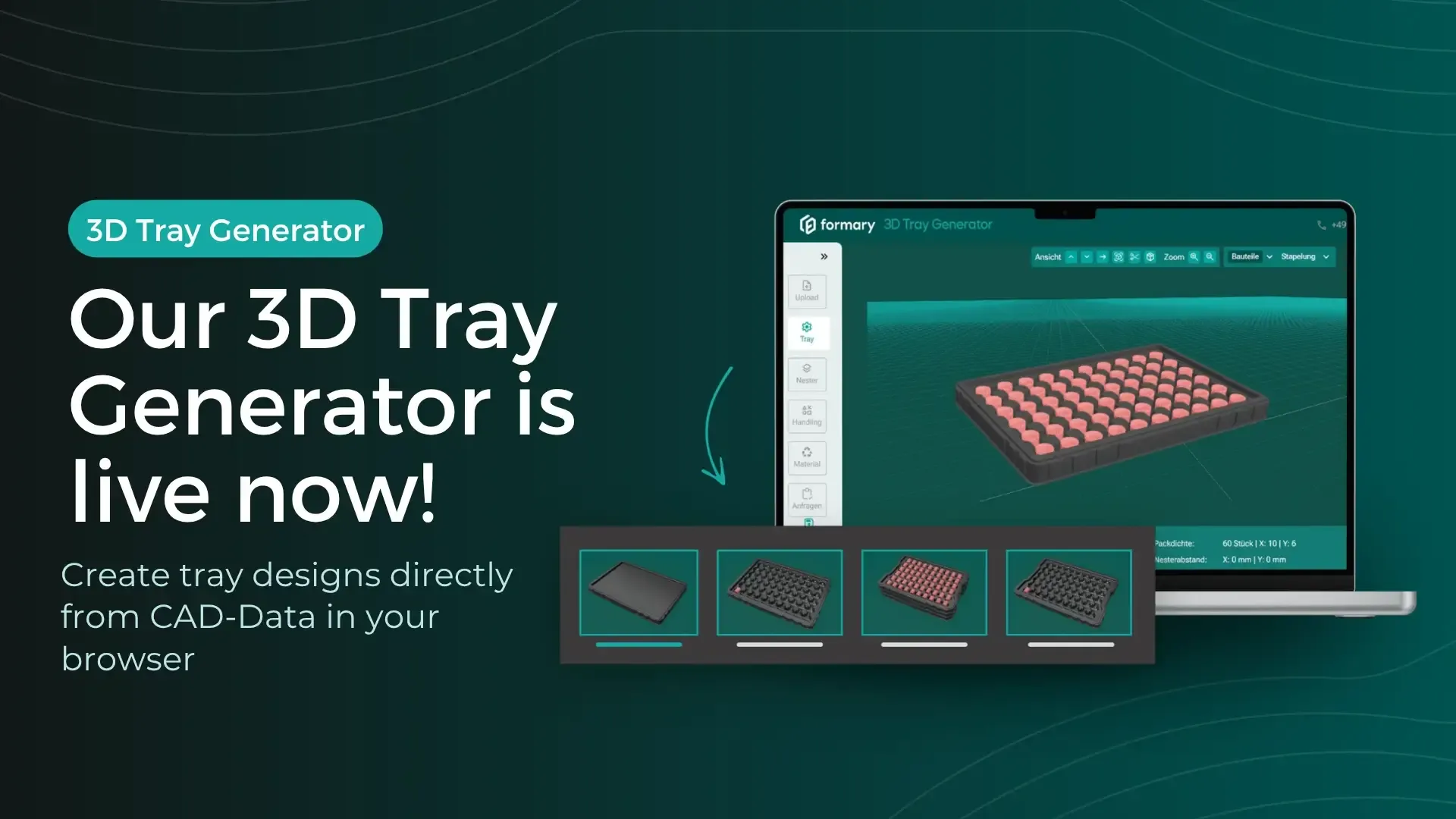
Now live: Create Tray Designs Directly from CAD Data in Your Browser
Planning plastic trays for transport, storage, or automated manufacturing processes often starts with one key question: what should a suitable tray for the component actually look like? This is exactly what the new web-based 3D Tray Generator answers within seconds. Learn more in this article.
Thermoformed Parts in Practice
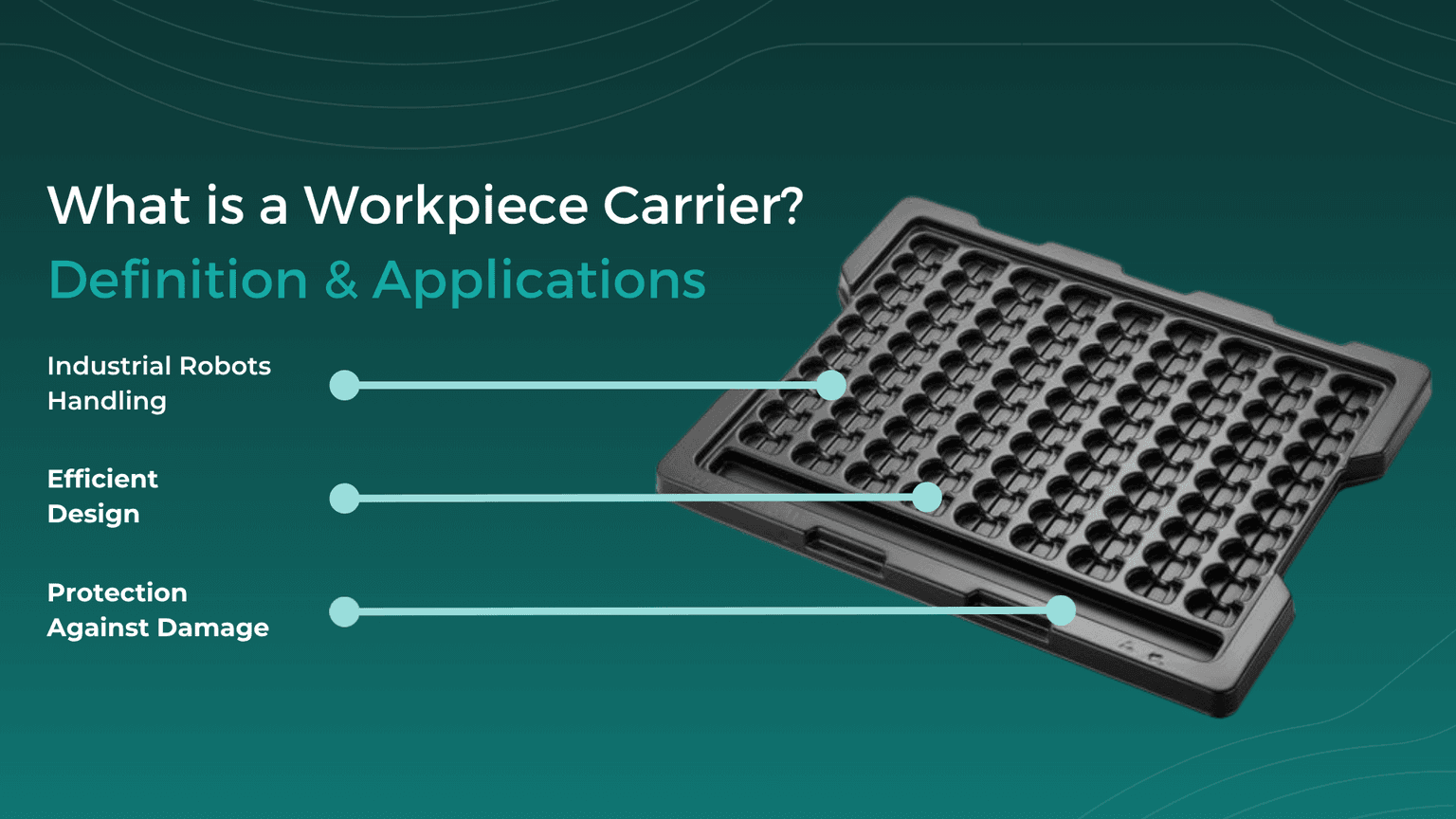
What Is a Workpiece Carrier? Definition & Applications
A constant challenge in the manufacturing industry is efficiently managing material flow throughout all assembly stages and departments. These logistical challenges can be optimally addressed by using product-specific workpiece carriers. Learn more in this article.
Platform & Features
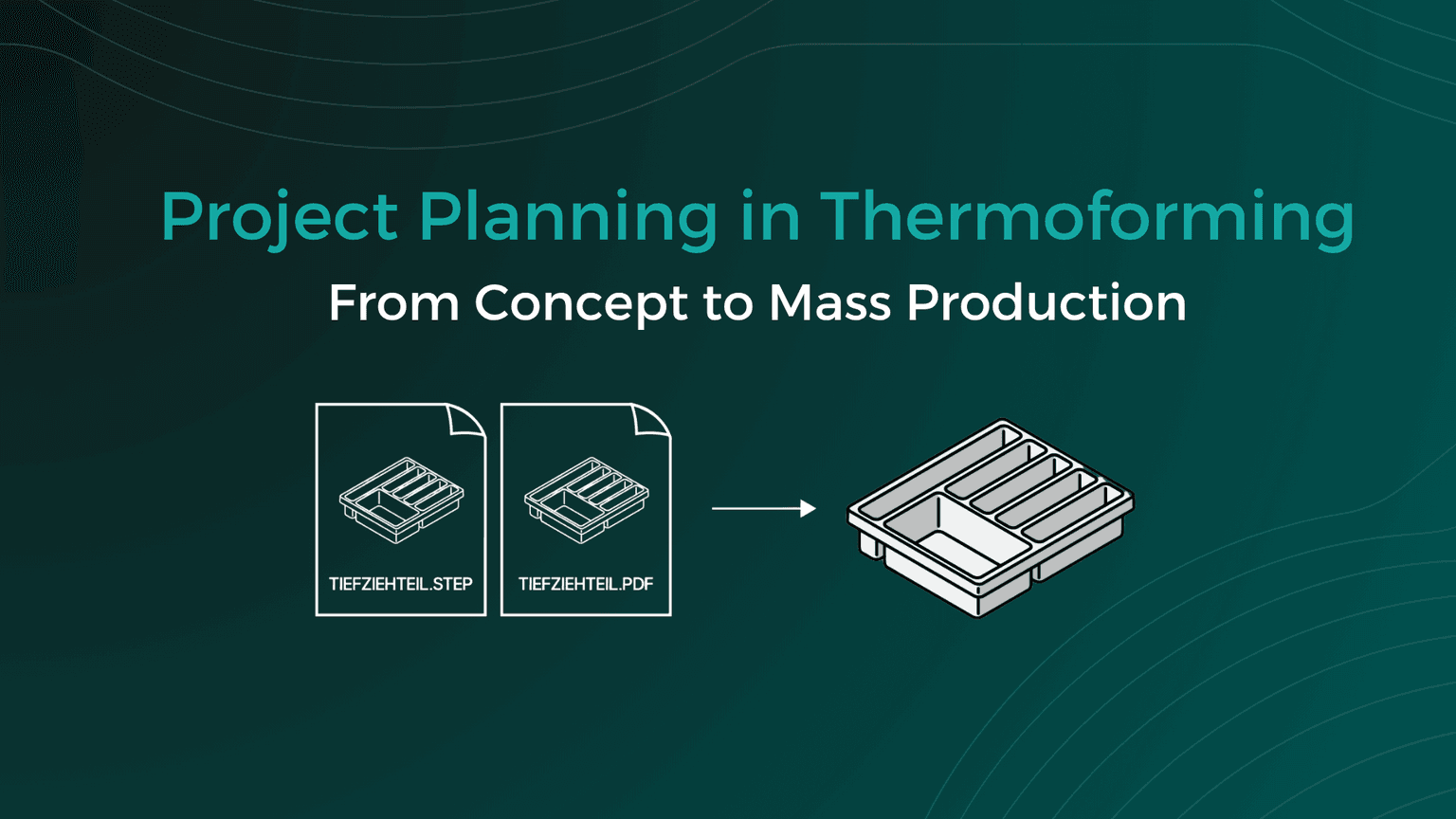
Project Planning in Thermoforming – From Concept to Mass Production
From the initial idea to mass production, various factors must be considered in thermoforming project planning, including material selection, tool manufacturing, and quality control. This article provides a detailed look at how a thermoforming project with formary is executed.
Thermoformed Parts in Practice
Automation of Production - How Trays Support Automation in Industry 4.0
Trays for automation are workpiece carriers that pass through an automated industrial system or production line, fulfilling various functions along the way.
Thermoformed Parts in Practice
Design Guidelines for Plastic Thermoformed Parts – Top 13 Tips for Plastic-Optimized Construction
Plastic thermoforming is shaped by factors like material quality, temperature, pressure, speed, and tool geometry. With the right design principles, you can prevent errors in CAD and production. formary has gathered key tips to help you optimize your thermoformed parts.
Thermoformed Parts in Practice
Warehouse Inventory: Tips & Tricks for Better Warehouse Organization and Efficiency with Trays
Warehouse inventories cost time, tie up staff, and often disrupt ongoing operations. This is especially true for small parts, serial components, or recurring components, where counting quickly becomes confusing if parts are stored loose in boxes or shelf compartments. Standard trays create a simple yet effective structure here for better warehouse organization. This article shows how trays optimize inventory counts in both the warehouse and production.
Thermoformed Parts in Practice
Standard Trays vs. Custom Tray Solutions: Which Option Is Best for Your Project?
Anyone sourcing plastic trays for transport, storage, or production quickly faces the question: choose a standard tray from the catalog or have a custom solution developed by a thermoforming specialist? Both options have their place. The right choice depends on the component, quantity, budget, and project requirements. This article explains which option is the right one for you.
Thermoformed Parts in Practice
Checklist: 10 Details a plastic thermoformer needs from you
You’re planning to source plastic thermoformed parts and want to submit a request for a quote. But what information does a thermoforming supplier really need to provide you with a meaningful quote? Incomplete requests lead to follow-up questions, delay the quoting process, and complicate the technical evaluation. If you provide the right information from the start, you’ll receive a reliable estimate faster and avoid unnecessary back-and-forth.