Tool Transfer in Thermoforming: A Guide for Existing Thermoformed Tools
Tool transfer in thermoforming makes it possible to continue using existing tools and to keep producing components without unnecessary costs or delays. In this article, you will learn about the benefits this offers, which information is required, and how formary efficiently supports the entire process.
Talida Eichhorn
Updated on May 27, 2026
Share
Tool Transfer in Plastic Thermoforming – Key Facts in Brief
A tool transfer allows existing thermoforming tools to be reused without the need to manufacture new tooling.
Companies save costs and time while reducing project risks and waste.
For a smooth transfer, key technical data must be available and clarified in advance.
formary handles the technical assessment and ensures efficient integration into the serial production process.
→ Would you like to transfer your tool? Contact us!
What Does Tool Transfer in Thermoforming Mean?
Tool transfer, often also referred to as tool relocation, describes the transfer of an existing thermoforming tool to a new manufacturer in order to continue production there without creating a new tool.
A prerequisite for a tool transfer to a new thermoforming supplier is that the tool is owned by the customer. This is typically the case if the tooling costs were listed separately in the original quotation and not allocated proportionally to part prices. In this situation, the tool belongs to the customer and can be withdrawn from the current manufacturer and relocated to another producer at any time.
The aim of tool transfer: to continue using existing tools efficiently and to maintain production without interruption.
When Does a Tool Transfer in Thermoforming Make Sense?
Relocating thermoforming tools is particularly beneficial when an existing thermoforming tool is still fully functional and capable of production. By continuing to use an existing tool instead of building a completely new one, companies can keep using their thermoformed tools economically, even if contract manufacturing with the current supplier is no longer desired.
Once a tool has been manufactured, it can typically be used for production over a very long service life. When aluminum tools are used and regular maintenance is carried out, production volumes of tens or even hundreds of thousands of cycles are common.
Why Are Thermoforming Tools Typically Transferred?
In industrial practice, the relocation of existing thermoforming tools can be a strategically important step. Companies sourcing plastic thermoformed parts usually relocate tools to ensure production continuity, control costs, and minimize risks.
Typical reasons for tool relocation include:
(Impending) insolvency or business closure of the current supplier To avoid production stoppages, tools are transferred early to an alternative manufacturer.
Quality issues within the existing supply chain Repeated deviations in dimensional accuracy, surface quality, or material processing make a change of supplier necessary.
Increasing cost pressure Changes in pricing structures, energy costs, or labor costs may require a more economical production setup.
Risk management and supply chain security Tool relocations are a proven means of reducing dependencies and increasing supply reliability.
Tool damage or limited production capability When maintenance, repairs, or modifications can no longer be carried out reliably by the current supplier.
Prevention of production downtime Early relocation helps prevent unplanned stoppages in series products with long life cycles.
Advantages of taking over existing thermoforming tools:
Cost efficiency: Avoiding new tool costs leads to significant cost savings.
Fast start of series production: Since the tool already exists and has been tested, sampling, prototyping, and production can begin much earlier.
High process reliability: Geometries and material behavior have already been validated, ensuring functionality and requiring only minimal adjustments.
Sustainability: The service life of the tool is extended and unnecessary new construction is avoided.
Guide: How Tool Transfer Works with formary
To ensure that a thermoforming tool can be seamlessly transferred to a new manufacturer, all technical details must be clarified in advance. formary reviews this information to ensure compatibility and a fast start to serial production.
The following questions should therefore be clarified upfront:
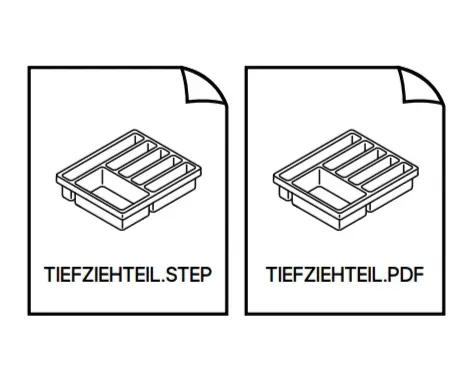
1. CAD Data
Are CAD data for the tool available?
Can 2D or 3D files be provided?
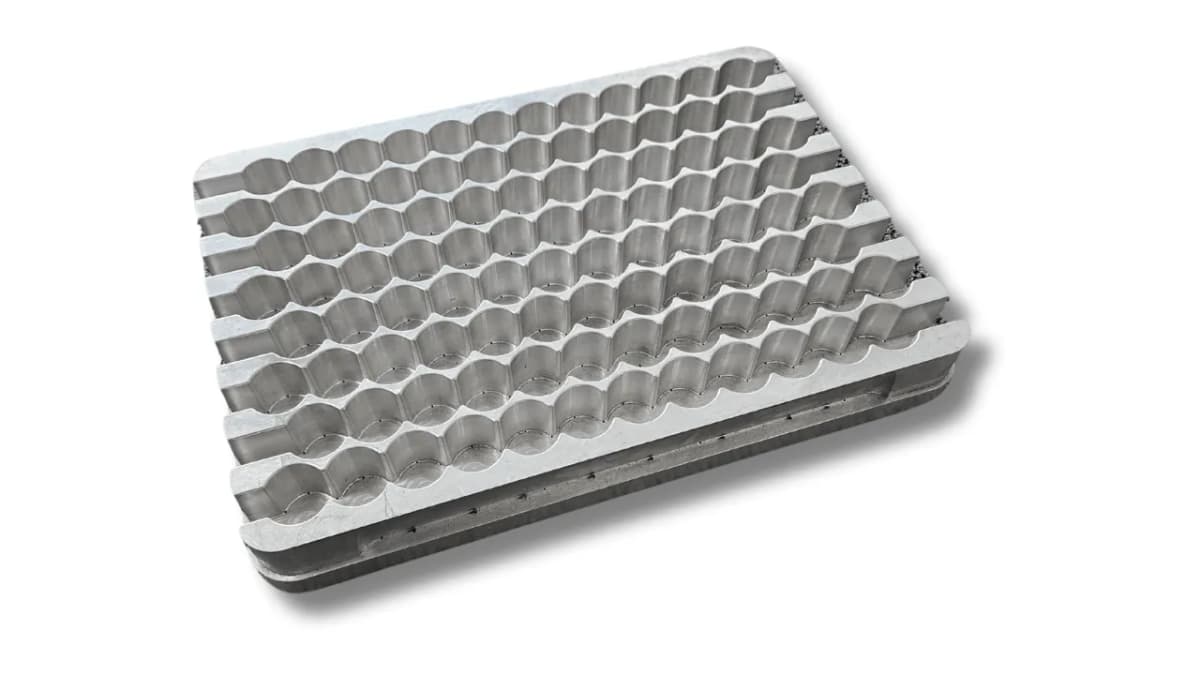
2. Photos & Visual Inspection
Are images of the tools available?
Are the vacuum ports visible?
What is the general condition?
Photos provide a quick indication of whether the tool, frame, and surfaces are intact.
3. Dimensions
What is the overall size of the tool?
What specific forming dimensions are involved?
These details affect machine compatibility and clamping options.
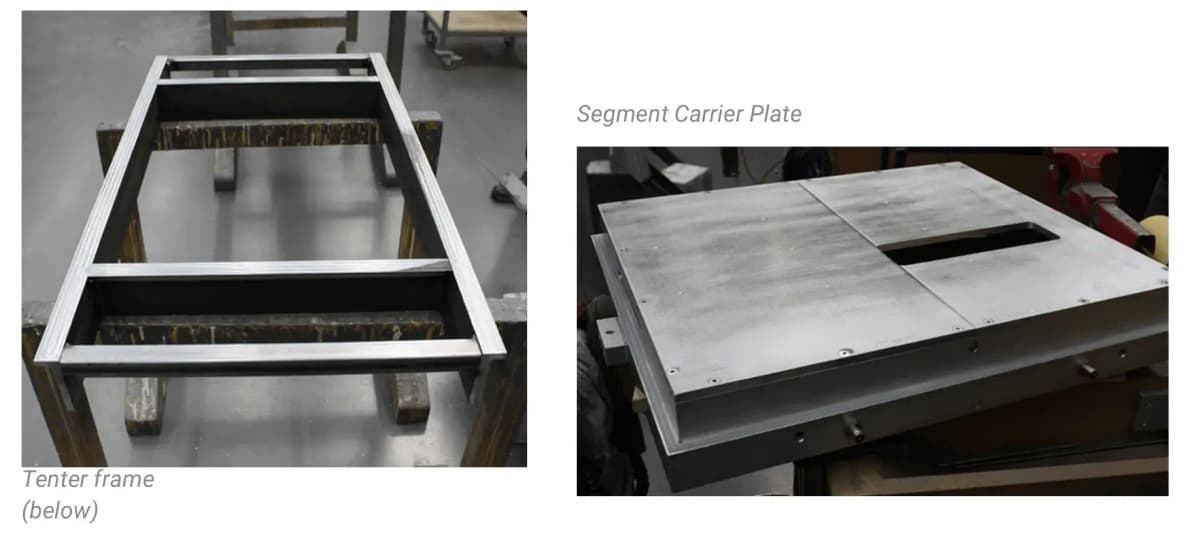
4. Substructures & Frames
Are substructures available?
Will these be provided?
Is a suitable frame available?
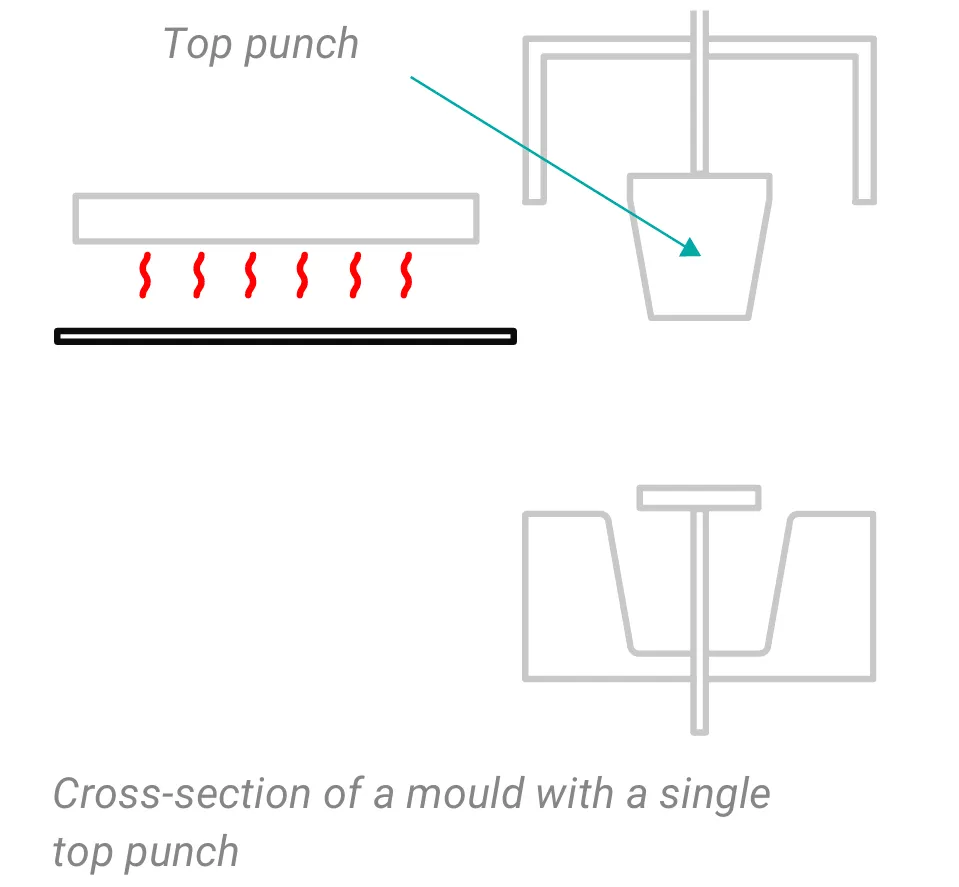
Is a top plug required – and if so, is it included?
All of these elements are important to ensure that the tool can be correctly installed on the target machine.
5. Base Plate
What are the dimensions of the base plate on which thermoforming has previously been carried out?
ℹ️Single-Cavity Tooling: One part per cycle, ideal for small production volumes and low tooling costs.
Multi-Cavity Tooling: Multiple identical parts per cycle, with higher tooling costs but significantly lower unit costs in series production.
8. Previously Used Machine
On which machine (manufacturer, model) has the tool been used so far?
This information helps facilitate the compatibility assessment. formary operates the following machines in its portfolio:
Depending on the downstream processing, the following documents or fixtures are required:
Milled Parts
Are milling fixtures available?
Is the milling program available?
Punched / Die-Cut Parts
Are the required punching tools available?
10. Material Data Sheet
Can you provide a material data sheet for the processed material?
This ensures that parts can be manufactured identically after the tool transfer.
11. Sample Parts
Are sample parts available that you can provide to us for evaluation? formary uses these samples for:
Dimensional analyses
Surface comparisons
Functional testing
Tool Transfer Checklist
The following checklist summarizes which information is required for a fast and secure tool transfer:
Category
Required Information
CAD Data
3D/2D files, tool geometry
Images
Detailed photos, condition, vacuum ports
Dimensions
Tool dimensions, base plate
Additional Elements
Frame, substructure, top plug
Machine Information
Previously used machine type
Cavities
Number of forming cavities
Cooling
Type of tool cooling
Trimming Tools
Milling fixture, milling program, or punching tool
Material
Data sheet of the material used
Sample Parts
Samples for evaluation
Conclusion: Tool transfer as a fast and economical route to series production
Tool transfer in deep drawing is one of the most efficient ways to continue producing existing components without delay and without incurring new tooling costs. Companies benefit from validated product quality and fast, cost-efficient series production. With formary, you receive a technical review within a very short time and secure integration of your tool into production.
Are you currently planning your deep drawing project? Then contact us—we will support you from the initial idea to implementation.
Frequently Asked Questions About Thermoforming Tool Transfer
Whenever the tool is still functional. Tool transfer reduces costs, enables faster production start-ups, and ensures that existing part geometries can continue to be produced unchanged.
In many cases, a transfer is significantly faster than building a new tool. The more complete the available data, the quicker series production can begin.
Transfers are used in any industry where series products need to be manufactured consistently over many years. Examples include medical technology, mechanical engineering, electronics, automotive, and industry.
Above all, components that are manufactured in long product life cycles, require precise fits, and are regularly reproduced.
Further Resources
Platform & Features
Ordering Standard Plastic Thermoformed Inserts: Step by Step for the formary Online Shop
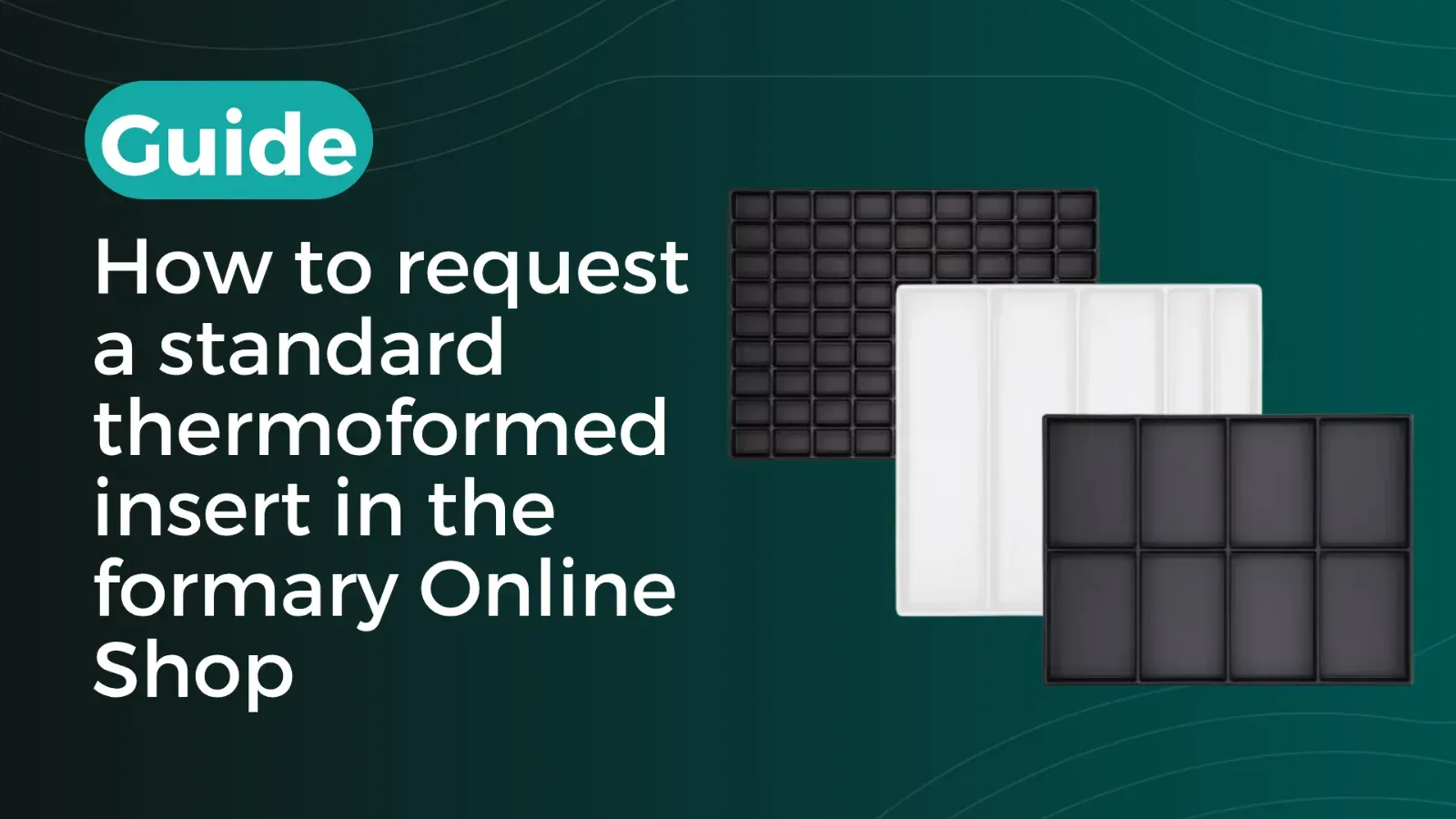
Standard plastic thermoformed inserts are suitable for companies that want to equip SLCs or Euro containers quickly, without tooling costs and starting from small quantities. The formary Online Shop offers 220 ready-made inserts, including standard versions made from white PS and ESD-resistant versions made from conductive black PS. In this article, we show you step by step how to find suitable standard thermoformed inserts in the formary Online Shop.
News
Now live: Create Tray Designs Directly from CAD Data in Your Browser
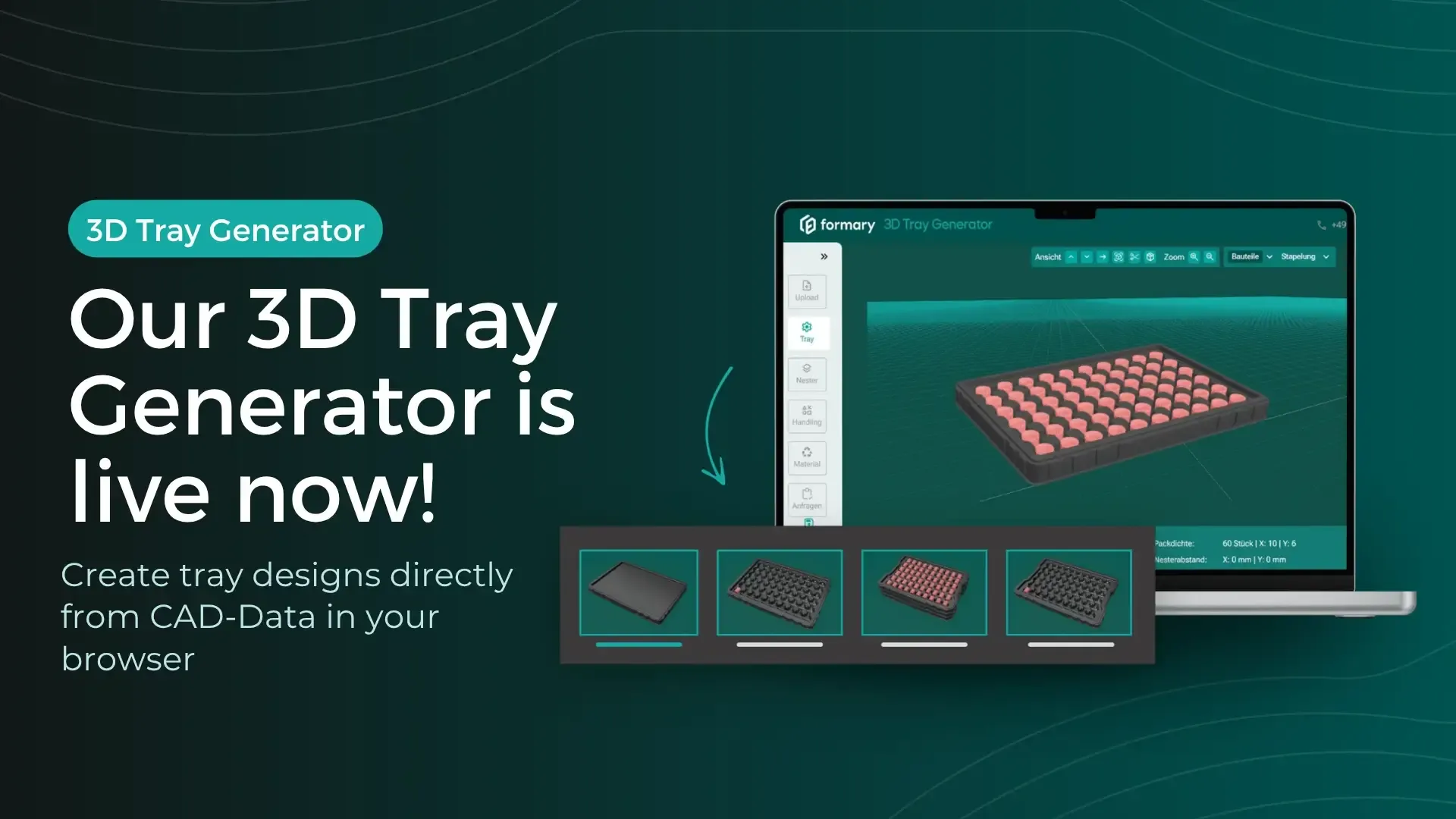
Planning plastic trays for transport, storage, or automated manufacturing processes often starts with one key question: what should a suitable tray for the component actually look like? This is exactly what the new web-based 3D Tray Generator answers within seconds. Learn more in this article.
Thermoformed Parts in Practice
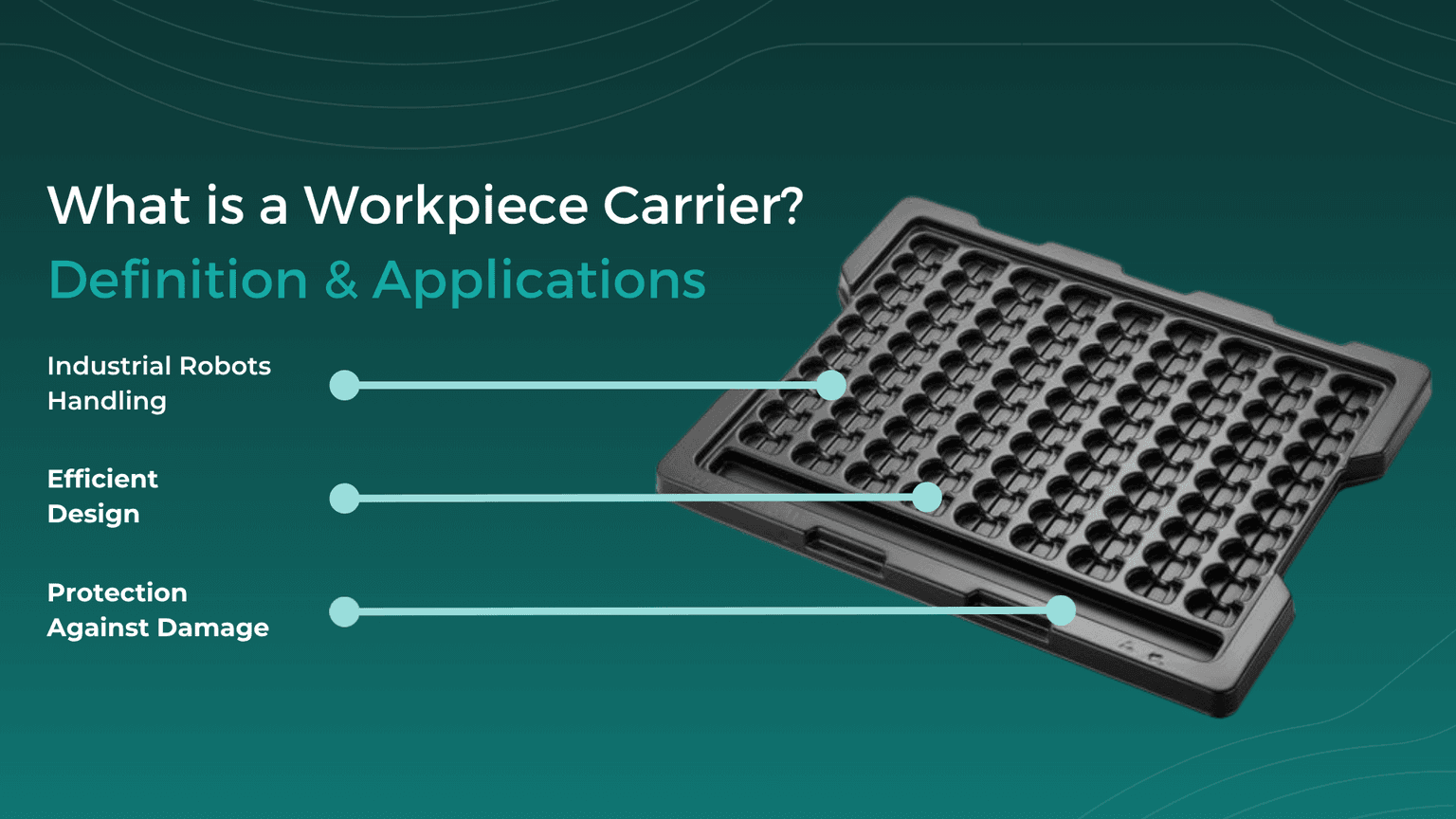
What Is a Workpiece Carrier? Definition & Applications
A constant challenge in the manufacturing industry is efficiently managing material flow throughout all assembly stages and departments. These logistical challenges can be optimally addressed by using product-specific workpiece carriers. Learn more in this article.
Platform & Features
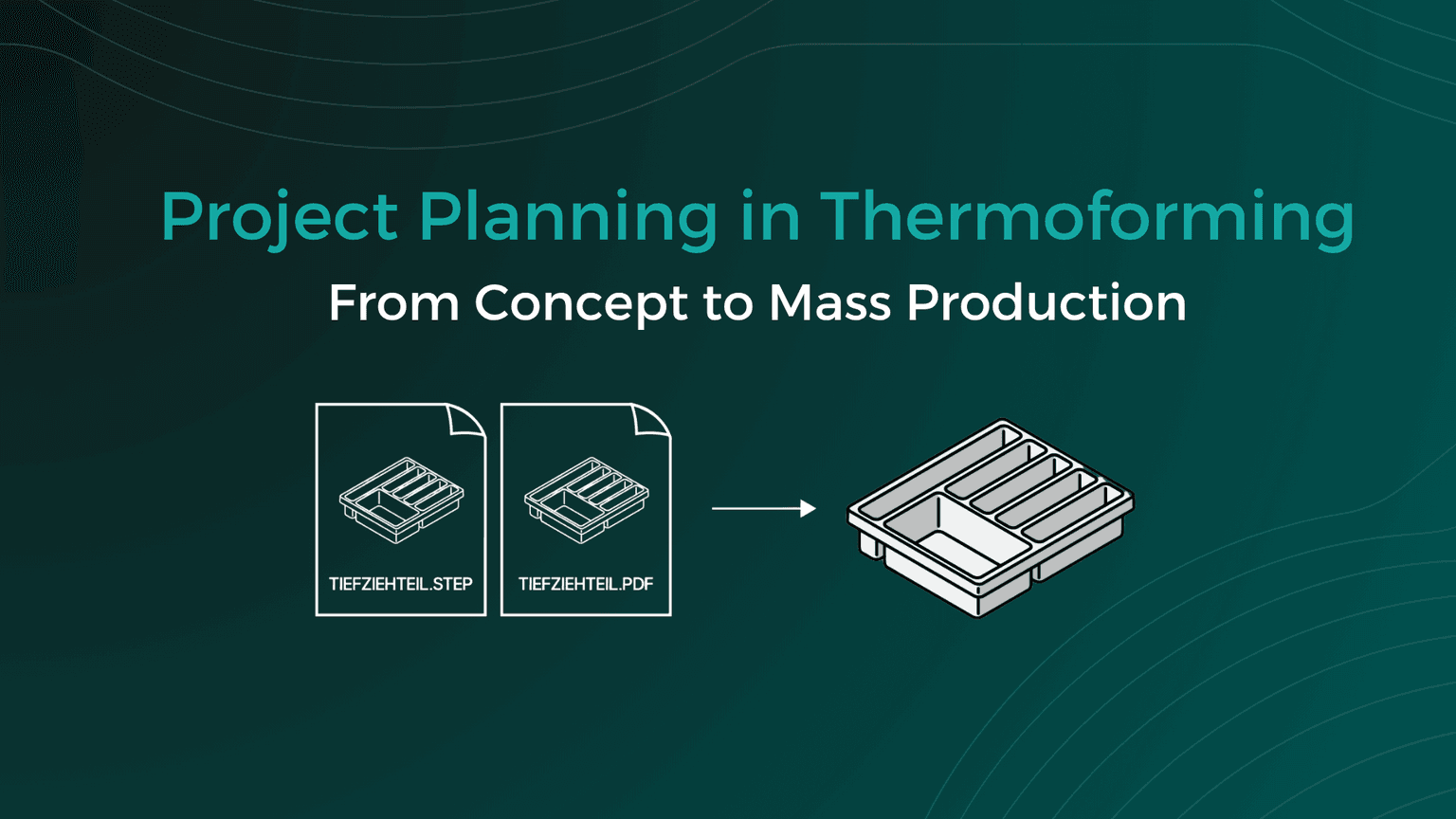
Project Planning in Thermoforming – From Concept to Mass Production
From the initial idea to mass production, various factors must be considered in thermoforming project planning, including material selection, tool manufacturing, and quality control. This article provides a detailed look at how a thermoforming project with formary is executed.
Thermoformed Parts in Practice
Automation of Production - How Trays Support Automation in Industry 4.0
Trays for automation are workpiece carriers that pass through an automated industrial system or production line, fulfilling various functions along the way.
Thermoformed Parts in Practice
Design Guidelines for Plastic Thermoformed Parts – Top 13 Tips for Plastic-Optimized Construction
Plastic thermoforming is shaped by factors like material quality, temperature, pressure, speed, and tool geometry. With the right design principles, you can prevent errors in CAD and production. formary has gathered key tips to help you optimize your thermoformed parts.
Thermoformed Parts in Practice
Warehouse Inventory: Tips & Tricks for Better Warehouse Organization and Efficiency with Trays
Warehouse inventories cost time, tie up staff, and often disrupt ongoing operations. This is especially true for small parts, serial components, or recurring components, where counting quickly becomes confusing if parts are stored loose in boxes or shelf compartments. Standard trays create a simple yet effective structure here for better warehouse organization. This article shows how trays optimize inventory counts in both the warehouse and production.
Thermoformed Parts in Practice
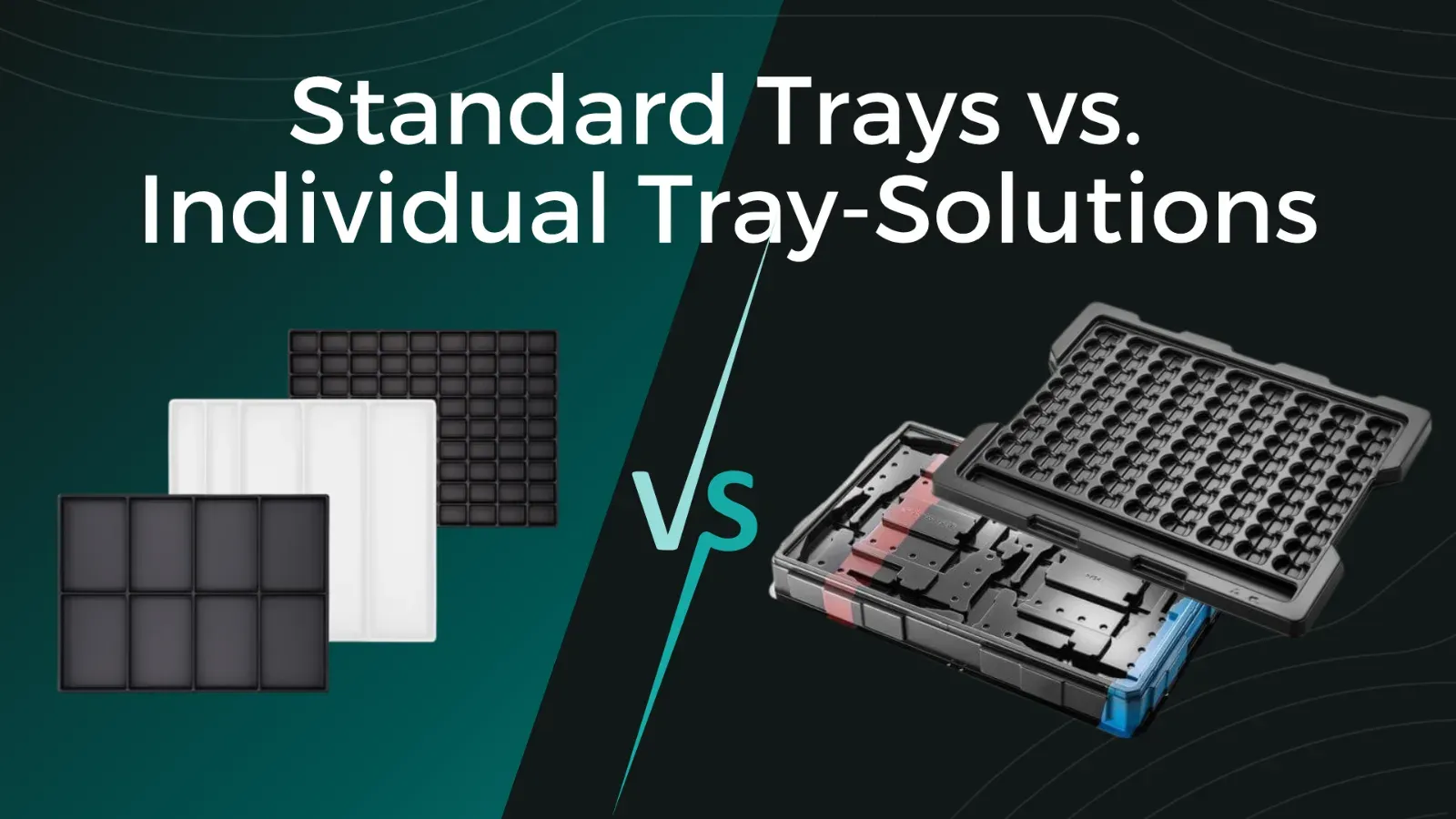
Standard Trays vs. Custom Tray Solutions: Which Option Is Best for Your Project?
Anyone sourcing plastic trays for transport, storage, or production quickly faces the question: choose a standard tray from the catalog or have a custom solution developed by a thermoforming specialist? Both options have their place. The right choice depends on the component, quantity, budget, and project requirements. This article explains which option is the right one for you.
Thermoformed Parts in Practice
Checklist: 10 Details a plastic thermoformer needs from you
You’re planning to source plastic thermoformed parts and want to submit a request for a quote. But what information does a thermoforming supplier really need to provide you with a meaningful quote? Incomplete requests lead to follow-up questions, delay the quoting process, and complicate the technical evaluation. If you provide the right information from the start, you’ll receive a reliable estimate faster and avoid unnecessary back-and-forth.