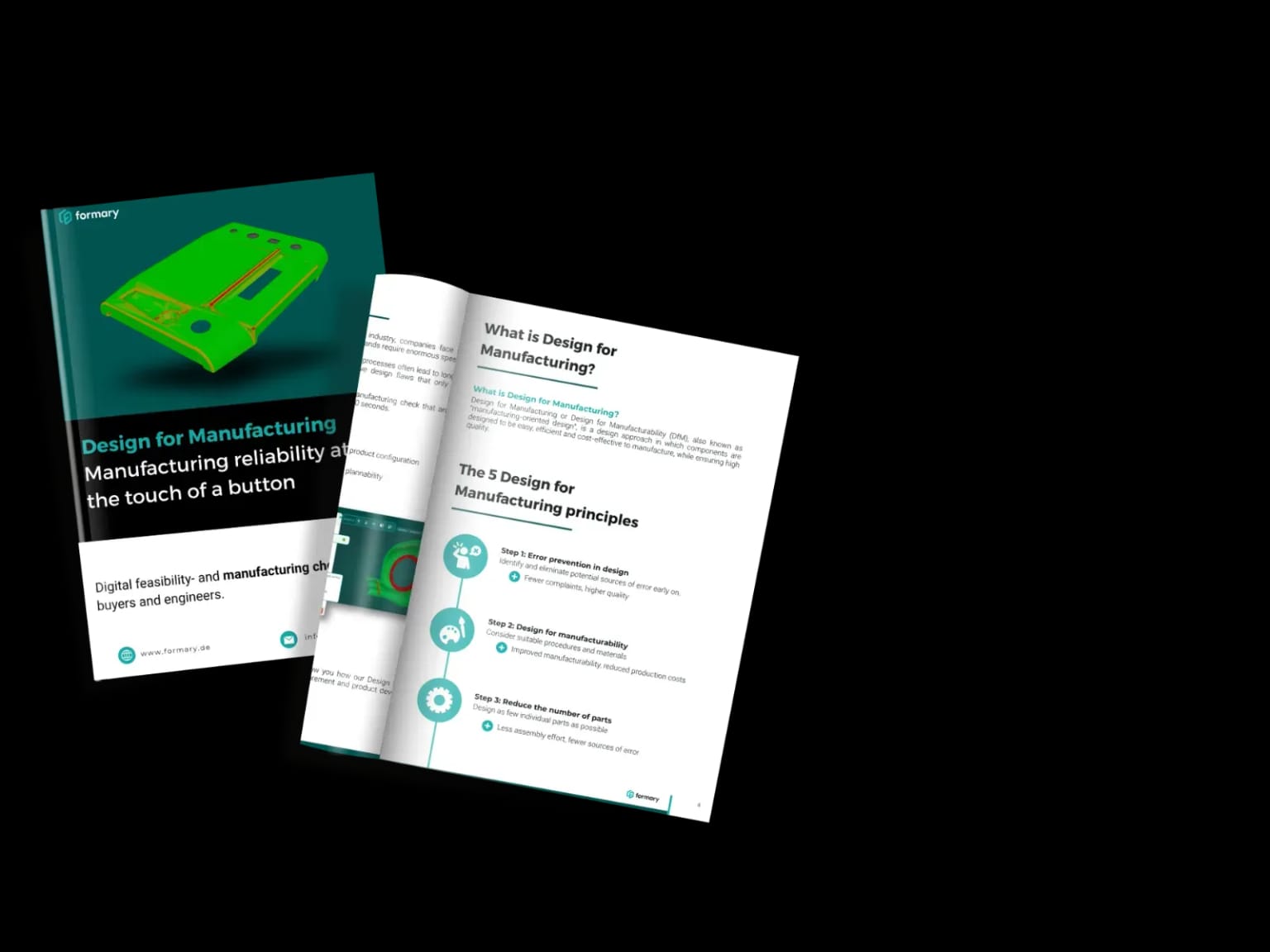


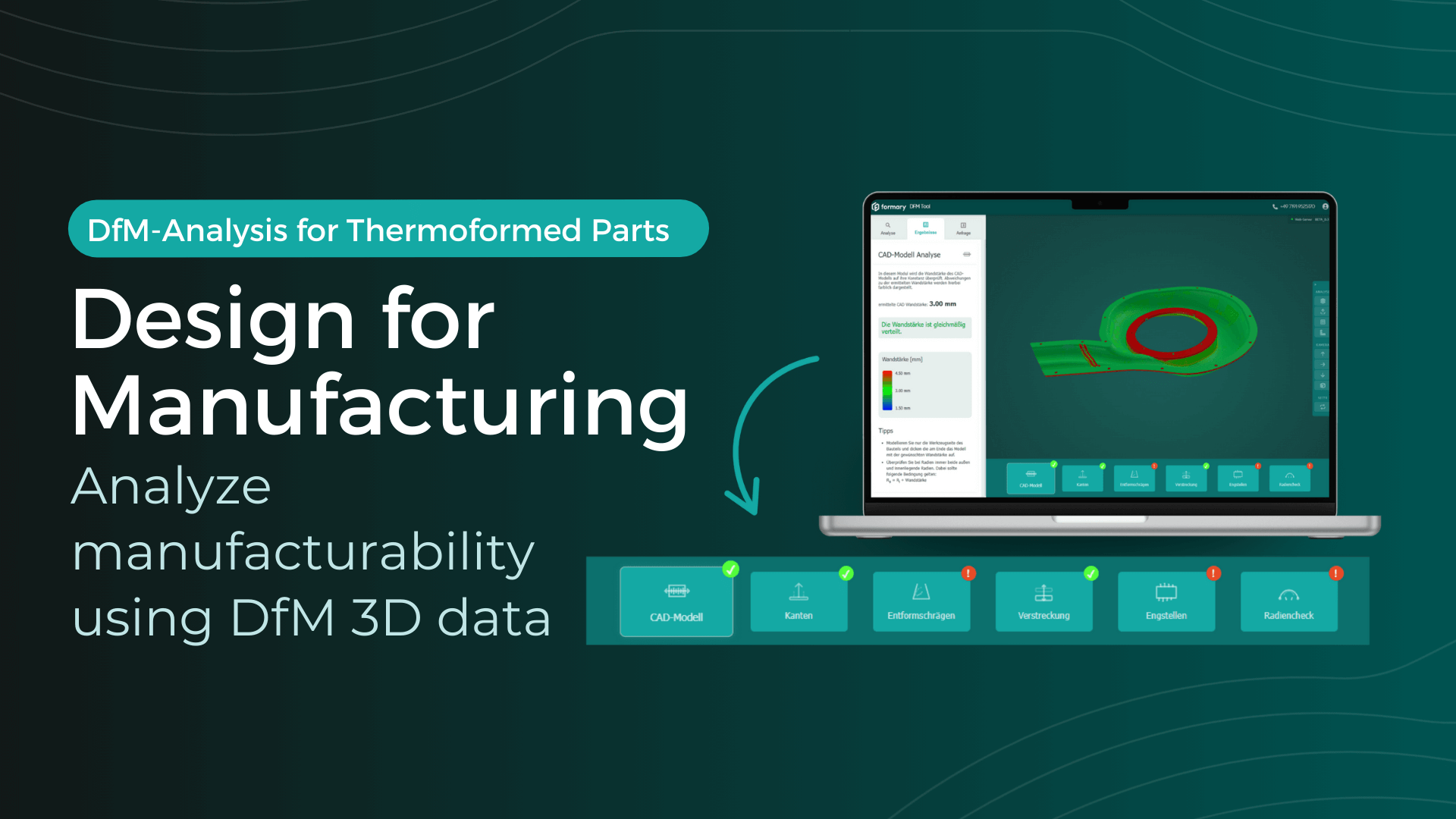

Are you developing plastic thermoformed parts and want to know during the design phase whether your design is manufacturable? Do critical wall thicknesses, demolding problems, or costly tool modifications slow down your projects? This guide shows how digital Design for Manufacturing (DfM) tools identify design errors early, reduce iteration loops, and accelerate production readiness.
Here’s an overview of the contents:

This whitepaper is aimed at everyone who develops, procures, or produces plastic thermoformed parts and faces the following challenges:
Market pressure, complexity, and digitalization are changing the requirements for designing plastic thermoformed parts. Four central developments make automated manufacturability analyses essential today:
The market demands shorter time-to-market cycles while tooling costs continue to rise. Companies can no longer afford to discover design errors only during prototype construction. Automated DfM checks shift error identification to the early design phase, where changes are still cost-effective.
Modern plastic thermoformed parts are becoming functionally more demanding. Integrated reinforcements, variable wall thicknesses, and complex undercuts require systematic manufacturability analyses. Without automated checks, the risk of rework, delays, and additional costs increases significantly.
CAD systems deliver highly precise 3D data. DfM tools use this to automatically identify and visually mark critical areas. This digitalization makes manufacturability inspections faster, more objective, and more reproducible than manual checks.
Experienced design engineers and process technicians are rare. Digital DfM analyses standardize expert knowledge and make it accessible even to less experienced employees. This keeps know-how available in the company, independent of individual persons.
The whitepaper dispenses with theoretical treatises and focuses on concrete application. You receive a step-by-step guide that you can implement directly in your next project. All steps from CAD upload to optimization decision are explained in a practical manner.
Learn from concrete data how companies reduce their iteration cycles from 3-4 to 1-2. The whitepaper shows where the biggest levers are and how you can use them in your organization. 15 pages of concentrated know-how, 20-30 minutes reading time for direct access to relevant expertise.
You receive a solid basis to evaluate when a DfM check is worthwhile, which parameters are critical, and which optimization strategies work in your situation. The whitepaper examines areas of application in robotics, medical technology, electronics, and industrial components. This creates confidence in argumentation with stakeholders.
Webinar: Manufacturing Feasibility at the Click of a Button
Learn in our free on-demand webinar (German with subtitles) how to use our DfM analysis and what features to expect.

The whitepaper explains automated DfM analysis for plastic thermoformed parts. You learn how to upload CAD data, which parameters are checked, and how the evaluation works. The focus is on practical application: reducing iteration cycles, identifying critical wall thicknesses early, and avoiding costly tool modifications.

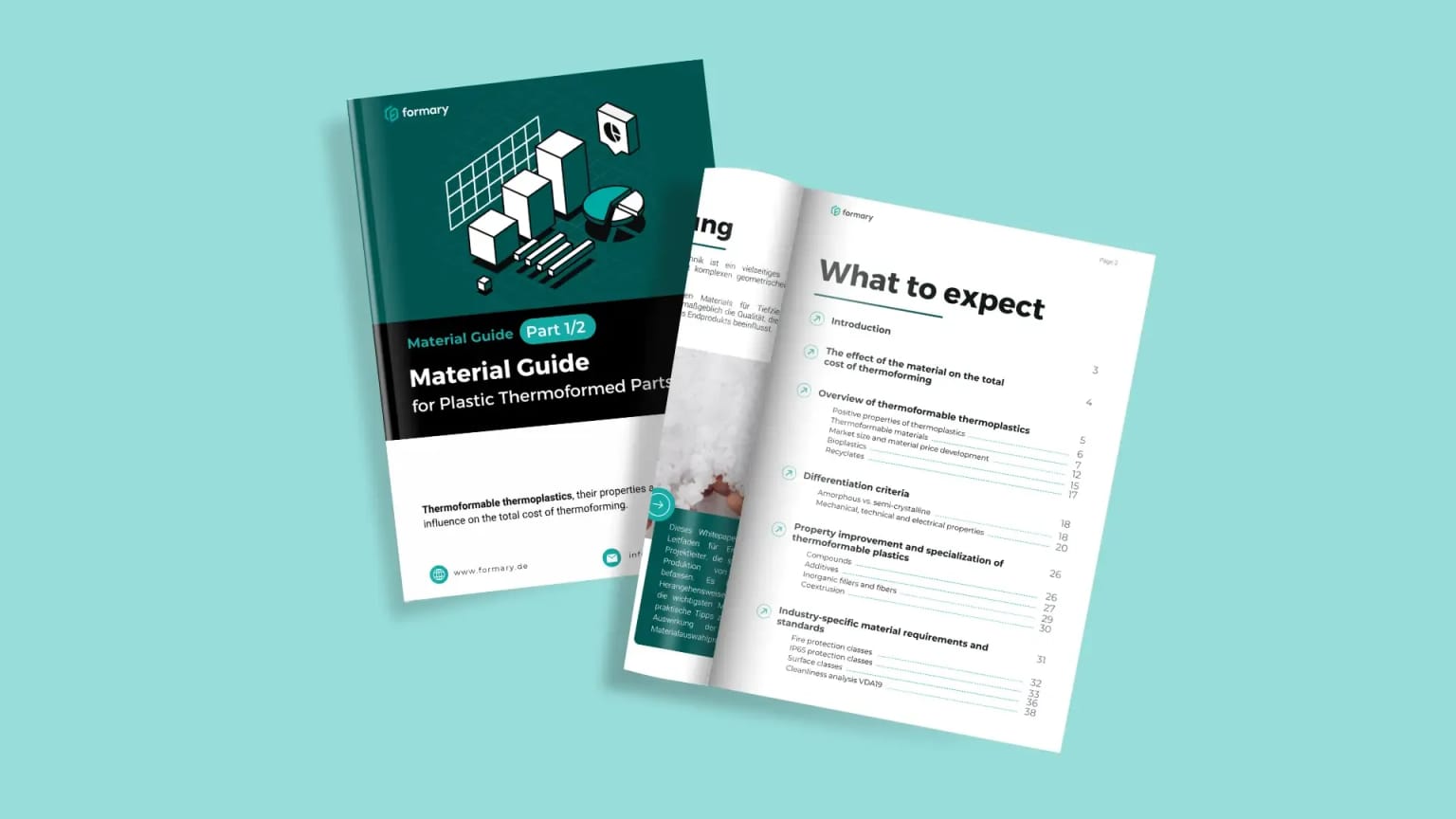
Material Guide for Plastic Thermoformed Parts (1/2)
Learn how different thermoplastics influence the performance of thermoformed parts and which industry-specific requirements and factors play a role in selecting the suitable plastic.
What to expect:

Finding the Right Supplier for Plastic Parts
Learn how to find the right supplier for your thermoforming project. This way you can prevent unreliable suppliers, poor consulting, long response times, and poor quality of plastic parts.
What to expect:

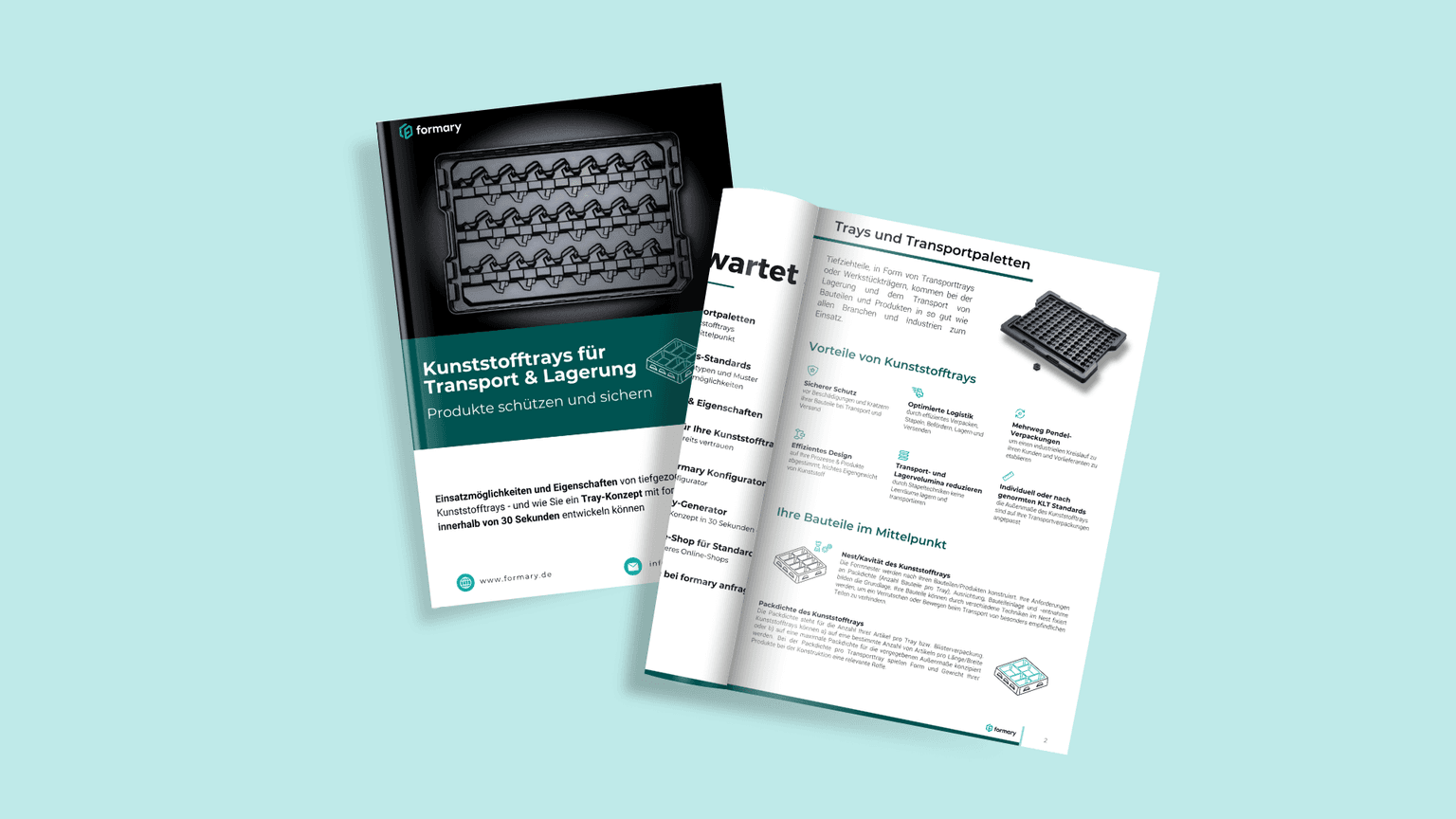
Plastic Trays: Fast Track to the Right Tray Solution
Learn what advantages plastic trays offer and how to develop an individual concept in seconds with the formary Tray Generator or order suitable standard trays with just a few clicks.
What to expect: