Simple, intuitive, efficient: the new formary configurator
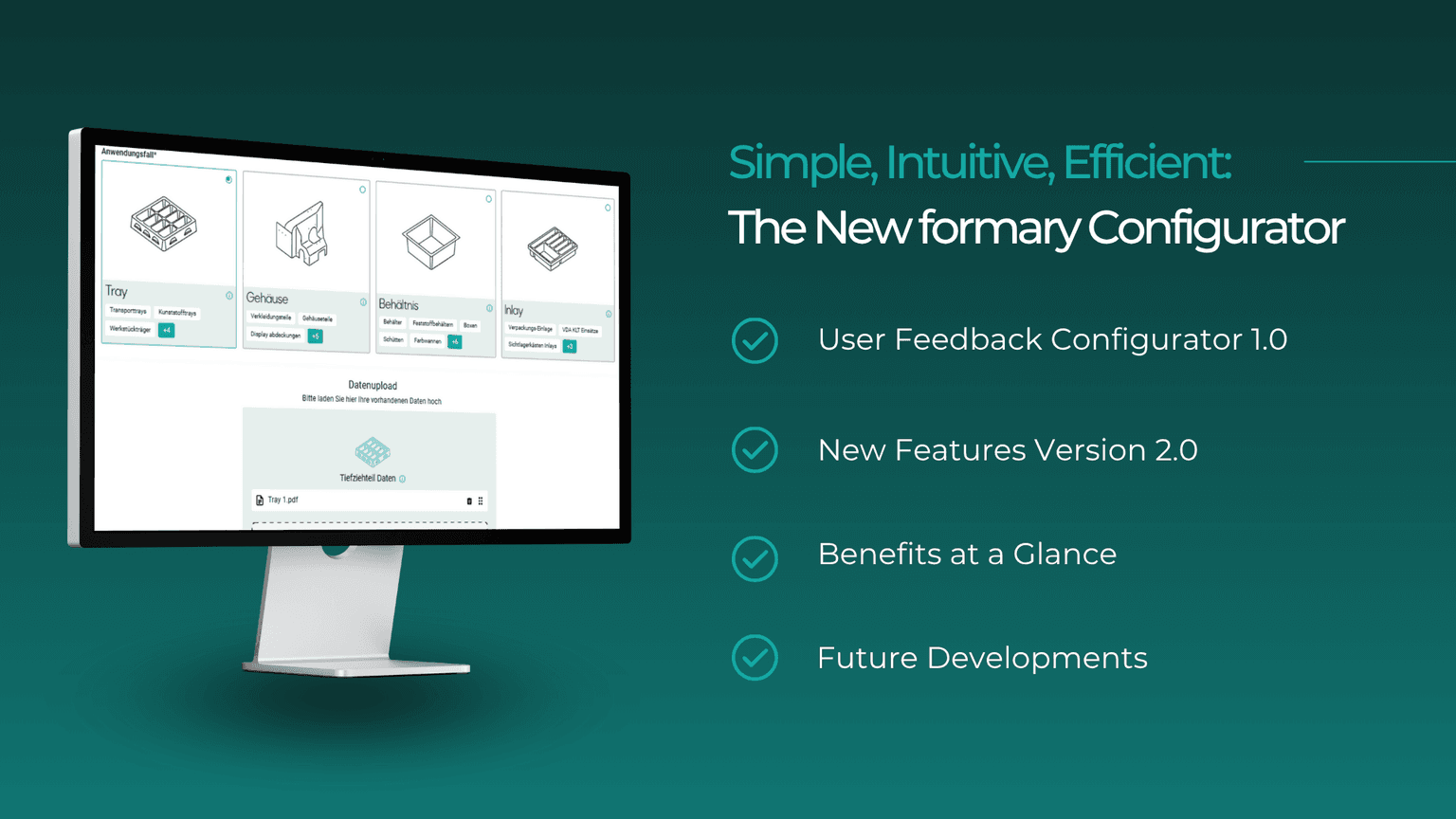
Now live: formary has introduced a revised version of its product configurator. The new development is the result of an intensive, user-centered development process based on extensive customer feedback. Read more in the article.
Sarah Guaglianone
Updated on June 1, 2026
Share
formary Configurator – Key features at a glance
The new formary configurator is based on extensive user feedback and offers a simplified, step-by-step user interface.
Key new features include direct access via 3D data upload, real-time visualisation and multiple configuration options.
Eight interface options allow for a customised configuration for various applications, with or without 3D data.
The new version of the configurator is based on numerous Discovery interviews that formary conducted with existing and potential customers in 2024. These interviews specifically identified weaknesses in the previous process and took note of users’ requirements.
Based on the findings, formary developed several prototypes, which were evaluated in internal tests and with customers. The process involved several rounds of iteration, during which formary further refined the user interface and optimised the range of functions.
Key user requirements:
Get started straight away by uploading data to minimise manual input
Clear, straightforward process guidance
Multiple items can be selected per request
Real-time 3D rendering for visual inspection
Get started straight away by uploading your data
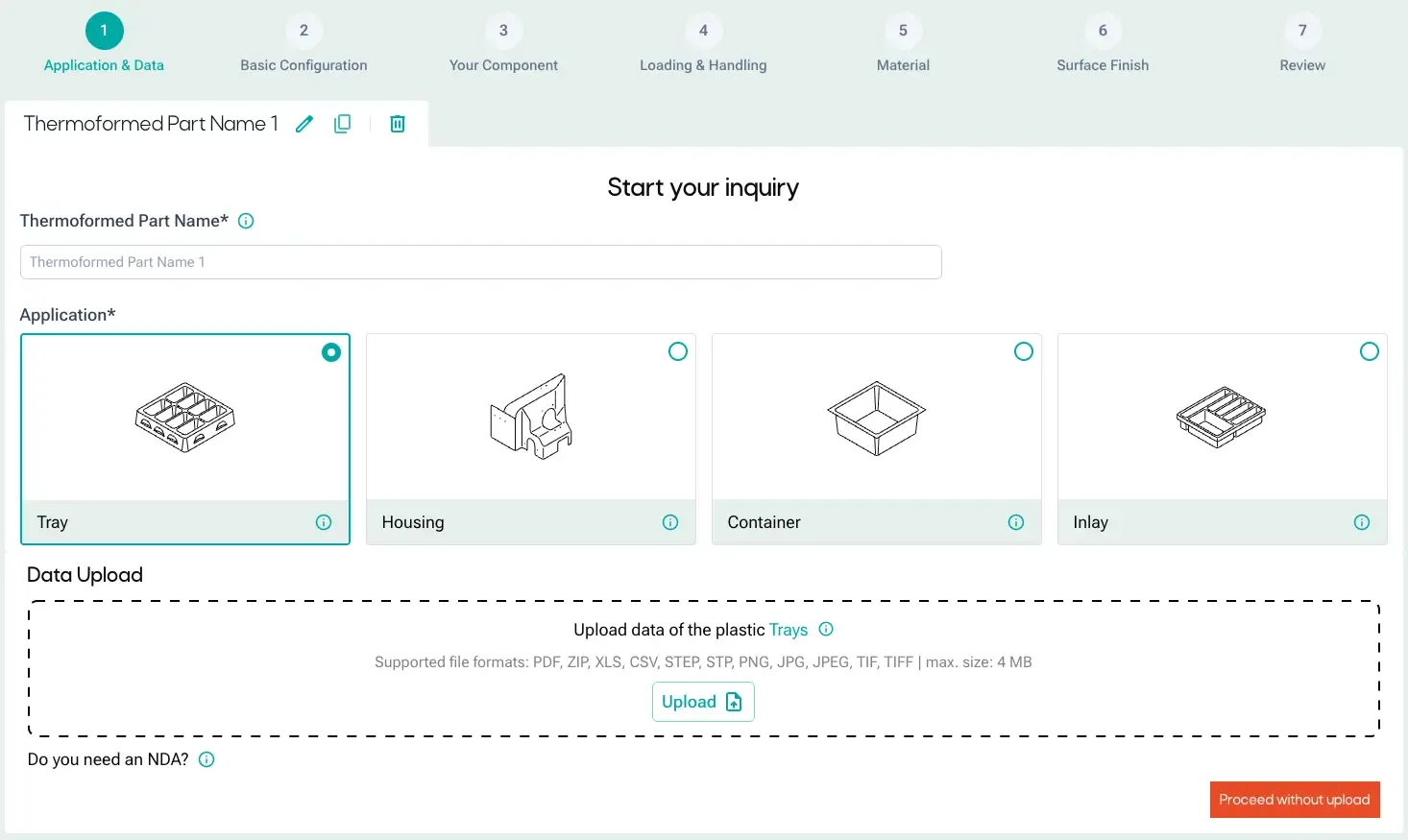
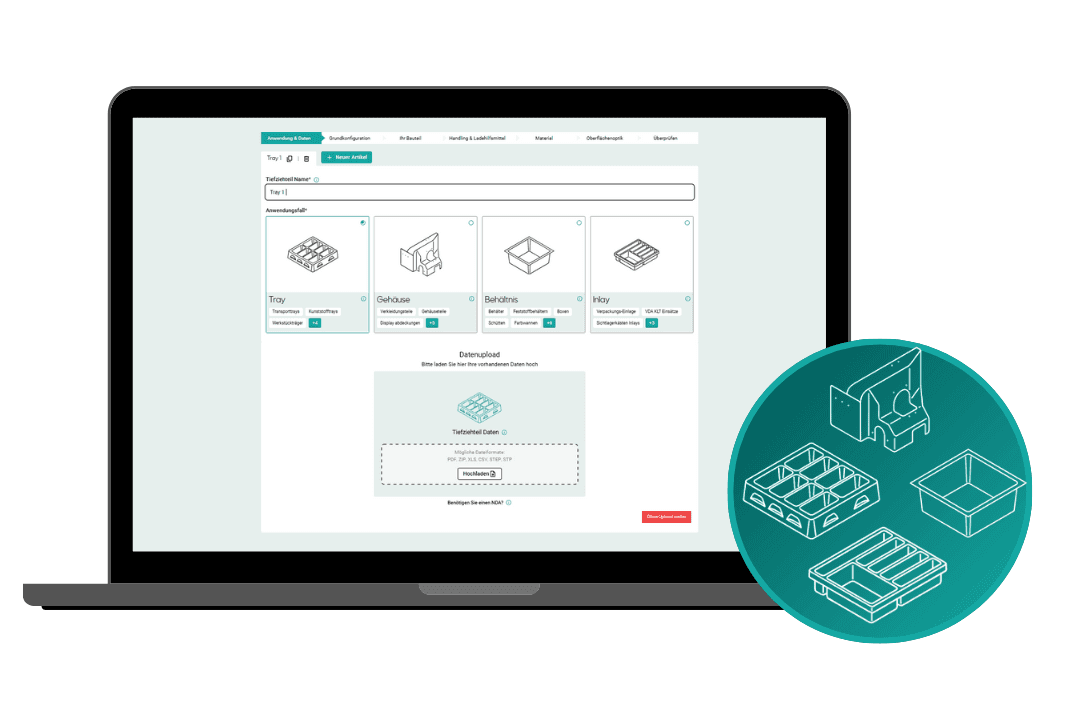
In the new version, the configuration process begins with a 3D data upload. This eliminates the need for a lot of manual input, as key information is extracted directly from the uploaded design data. This ensures a smooth start.
Improved visualisation thanks to 3D rendering
Another new feature is the real-time rendering of uploaded 3D data. This data is displayed throughout the entire process and can be visually checked. This means you always have a clear view of your product.
Efficiency through multiple configurations
One of the biggest new features is the ability to configure and request multiple items at the same time. Customers can now:
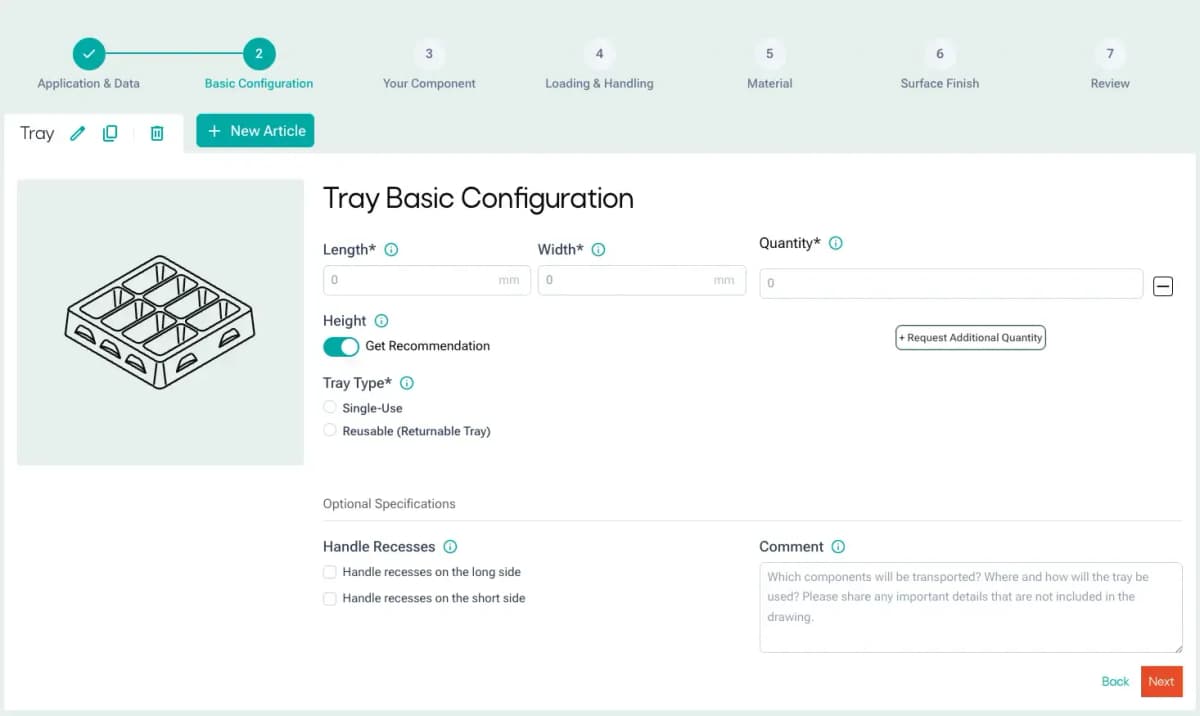
Add new items: You can configure as many products as you like within a single enquiry via the ‘New Item’ tab.
Duplicate product: Products that have already been configured can be easily copied and customised, which saves time, particularly when dealing with similar variants of a product.
The new multi-configuration feature makes the new configurator particularly appealing to customers who wish to carry out complex projects involving multiple product variants.
Linear, intuitive user guidance and customisation options
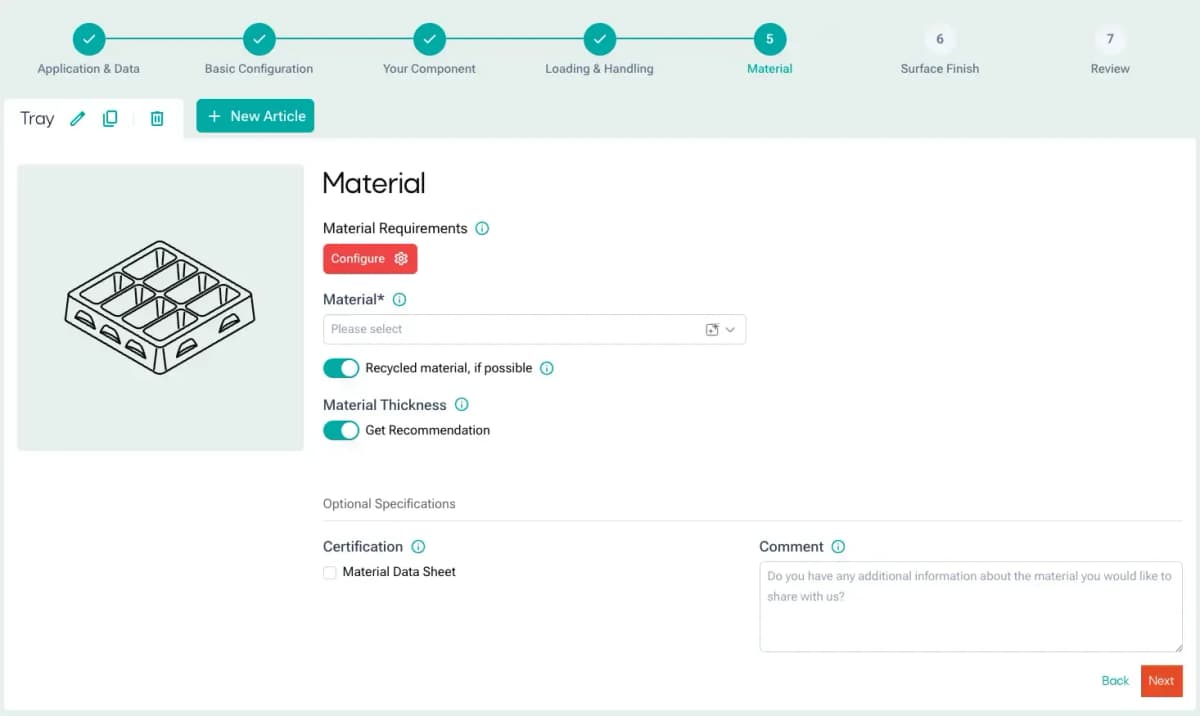
The configurator’s linear design guides you through the process step by step. The number of input fields has been reduced and they are clearly structured, making the process easier and more efficient to use. At the same time, the range of configuration options remains extensive.
At the end of the process, you can provide additional details, such as quotation deadlines, internal reference numbers or specific comments. This allows you to tailor the enquiry precisely to your requirements.
Specifying use cases
A key element of the revision is the restructuring of the use cases. Whereas the categories were previously defined in more general terms – such as ‘transport’ or ‘automation’ – they have now been made more specific and named at product level. The applications “Tray”,“Inlay”,“Housing” and “Container” are now clearly in focus.
8 different interface options
Another key difference lies in the differentiated handling of 3D data. The configurator now offers two separate interfaces, depending on whether or not the customer uploads 3D data for the deep-drawn part. This adaptation results in a total of eight different interface variants, each tailored to the four use cases mentioned above.
Further technical developments in the pipeline
formary is currently working on new tools designed to make your procurement processes even more efficient in the future.
3D Tray Generator
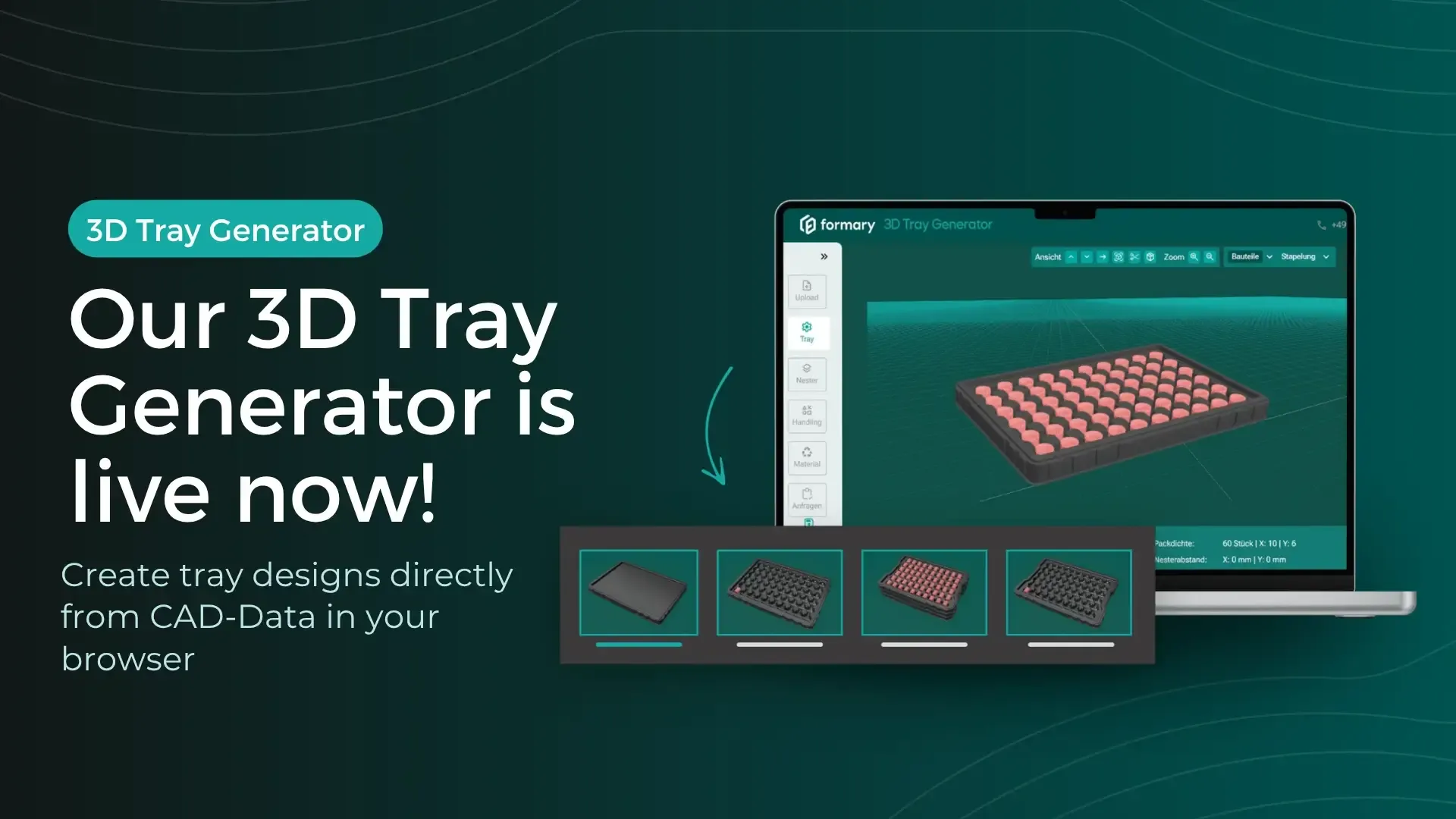
The 3D Tray Generator creates a visual design for blister packs and trays in a matter of seconds, based on the customer’s specifications. It provides a complete 3D representation, including dimensions, nesting layout, packing density and stacking technique.
The Tray Generator is currently being used internally as a beta version. It is due to be integrated into the website this year. Sign up here for the waiting list to be one of the first to use the Tray Generator directly.
Automated DfM analysis
The Design for Manufacturing check analyses uploaded CAD data for technical deep-drawn parts, such as housings and containers, to assess their manufacturability. The DfM analysis identifies typical problem areas such as wall thicknesses, radii and draft angles, and provides optimisation suggestions – including the optimal drawing direction and technical guidance.
Request a thermoformed part now using the optimised configurator
The updated formary configurator offers an optimised user experience, greater flexibility and additional features such as 3D visualisation and multi-configuration. The new user interface makes it easier to configure deep-drawn parts and reduces the effort involved – without compromising on quality.
Try out the new version of the configurator to see for yourself. We look forward to your feedback.
Frequently Asked Questions About the New formary Configurator
Ordering Standard Plastic Thermoformed Inserts: Step by Step for the formary Online Shop
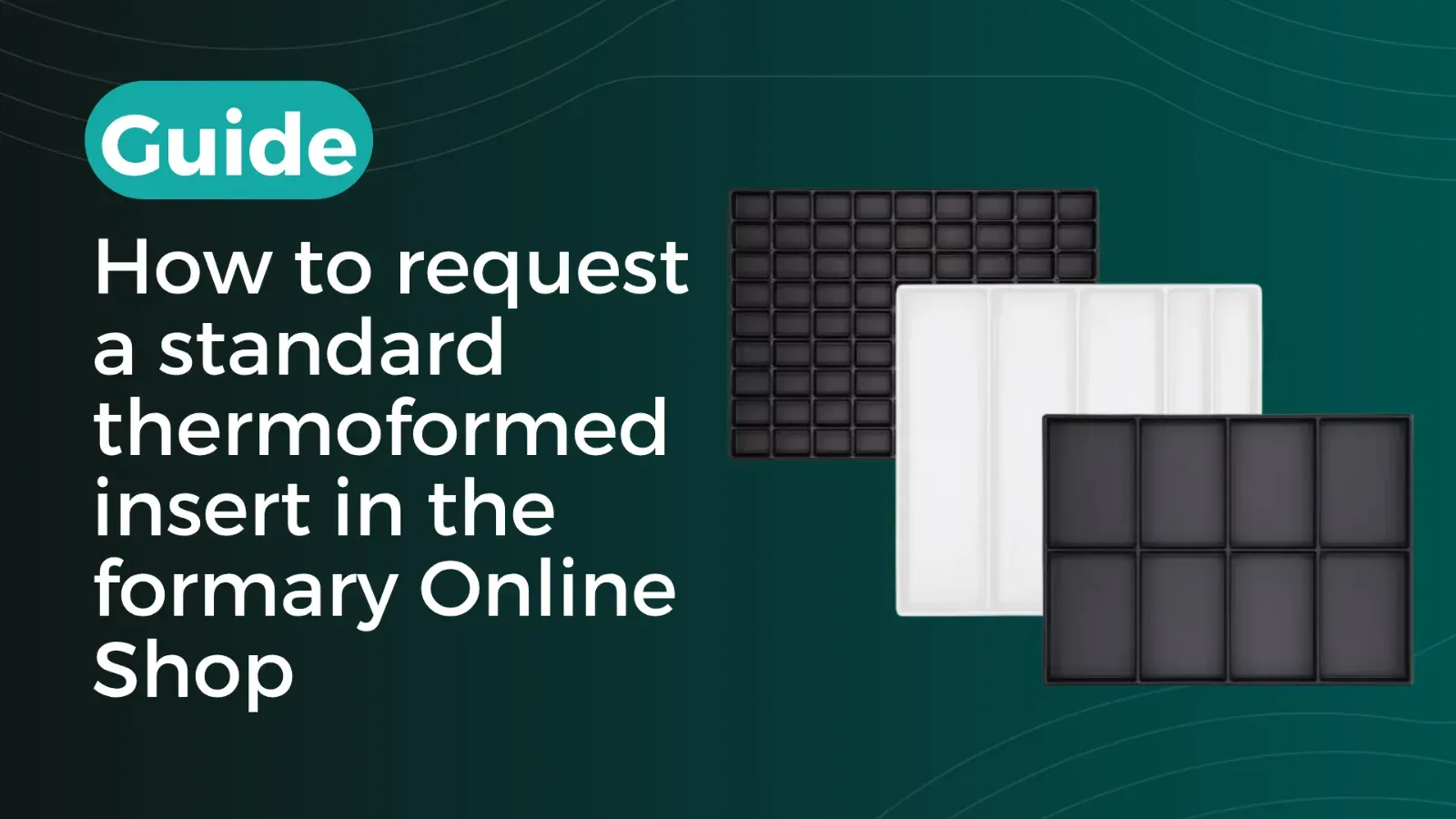
Standard plastic thermoformed inserts are suitable for companies that want to equip SLCs or Euro containers quickly, without tooling costs and starting from small quantities. The formary Online Shop offers 220 ready-made inserts, including standard versions made from white PS and ESD-resistant versions made from conductive black PS. In this article, we show you step by step how to find suitable standard thermoformed inserts in the formary Online Shop.
News
Now live: Create Tray Designs Directly from CAD Data in Your Browser
Planning plastic trays for transport, storage, or automated manufacturing processes often starts with one key question: what should a suitable tray for the component actually look like? This is exactly what the new web-based 3D Tray Generator answers within seconds. Learn more in this article.
Thermoformed Parts in Practice
What Is a Workpiece Carrier? Definition & Applications
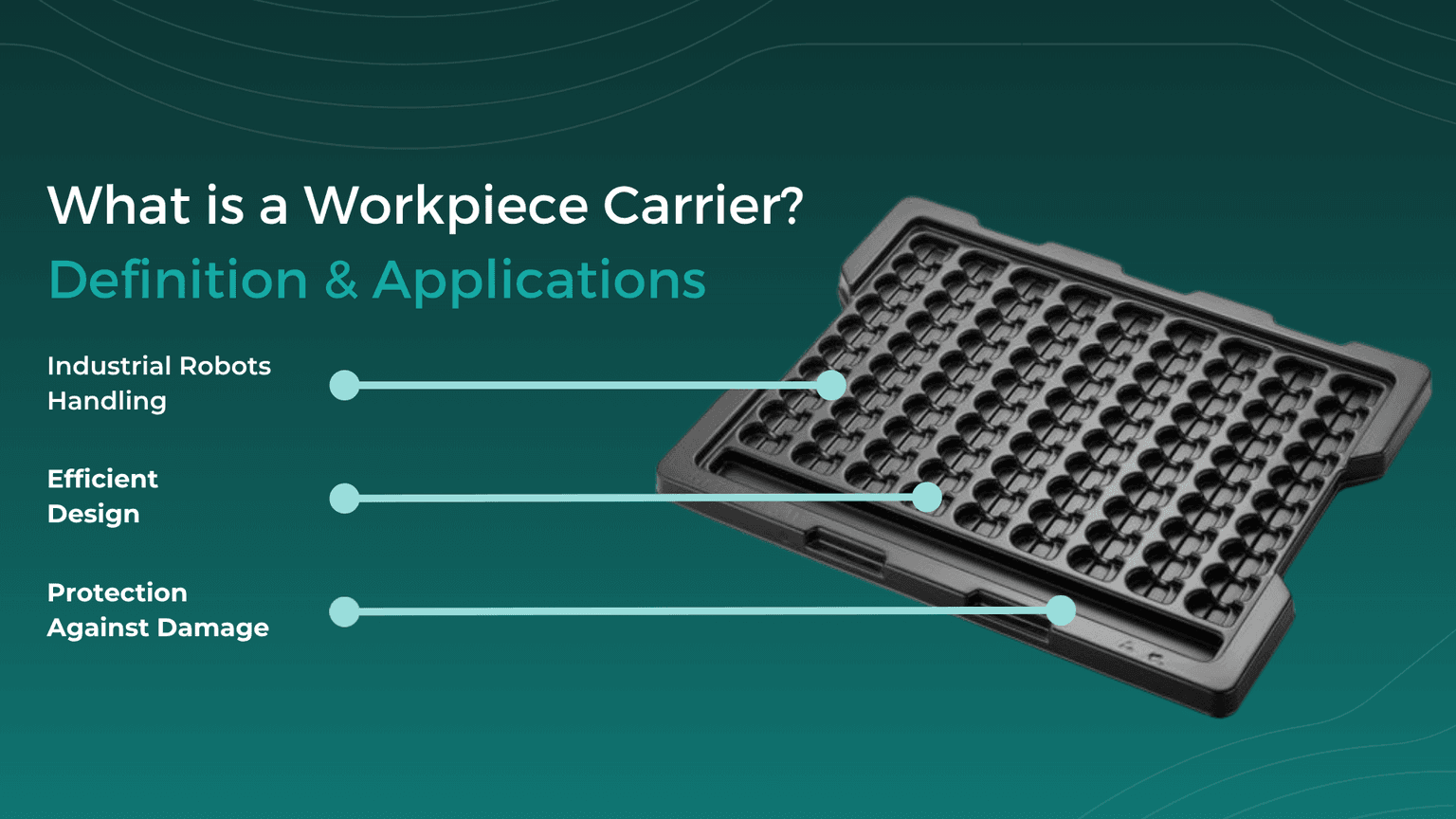
A constant challenge in the manufacturing industry is efficiently managing material flow throughout all assembly stages and departments. These logistical challenges can be optimally addressed by using product-specific workpiece carriers. Learn more in this article.
Platform & Features
Project Planning in Thermoforming – From Concept to Mass Production
From the initial idea to mass production, various factors must be considered in thermoforming project planning, including material selection, tool manufacturing, and quality control. This article provides a detailed look at how a thermoforming project with formary is executed.
Thermoformed Parts in Practice
Automation of Production - How Trays Support Automation in Industry 4.0
Trays for automation are workpiece carriers that pass through an automated industrial system or production line, fulfilling various functions along the way.
Thermoformed Parts in Practice
Design Guidelines for Plastic Thermoformed Parts – Top 13 Tips for Plastic-Optimized Construction
Plastic thermoforming is shaped by factors like material quality, temperature, pressure, speed, and tool geometry. With the right design principles, you can prevent errors in CAD and production. formary has gathered key tips to help you optimize your thermoformed parts.
Thermoformed Parts in Practice
Warehouse Inventory: Tips & Tricks for Better Warehouse Organization and Efficiency with Trays
Warehouse inventories cost time, tie up staff, and often disrupt ongoing operations. This is especially true for small parts, serial components, or recurring components, where counting quickly becomes confusing if parts are stored loose in boxes or shelf compartments. Standard trays create a simple yet effective structure here for better warehouse organization. This article shows how trays optimize inventory counts in both the warehouse and production.
Thermoformed Parts in Practice
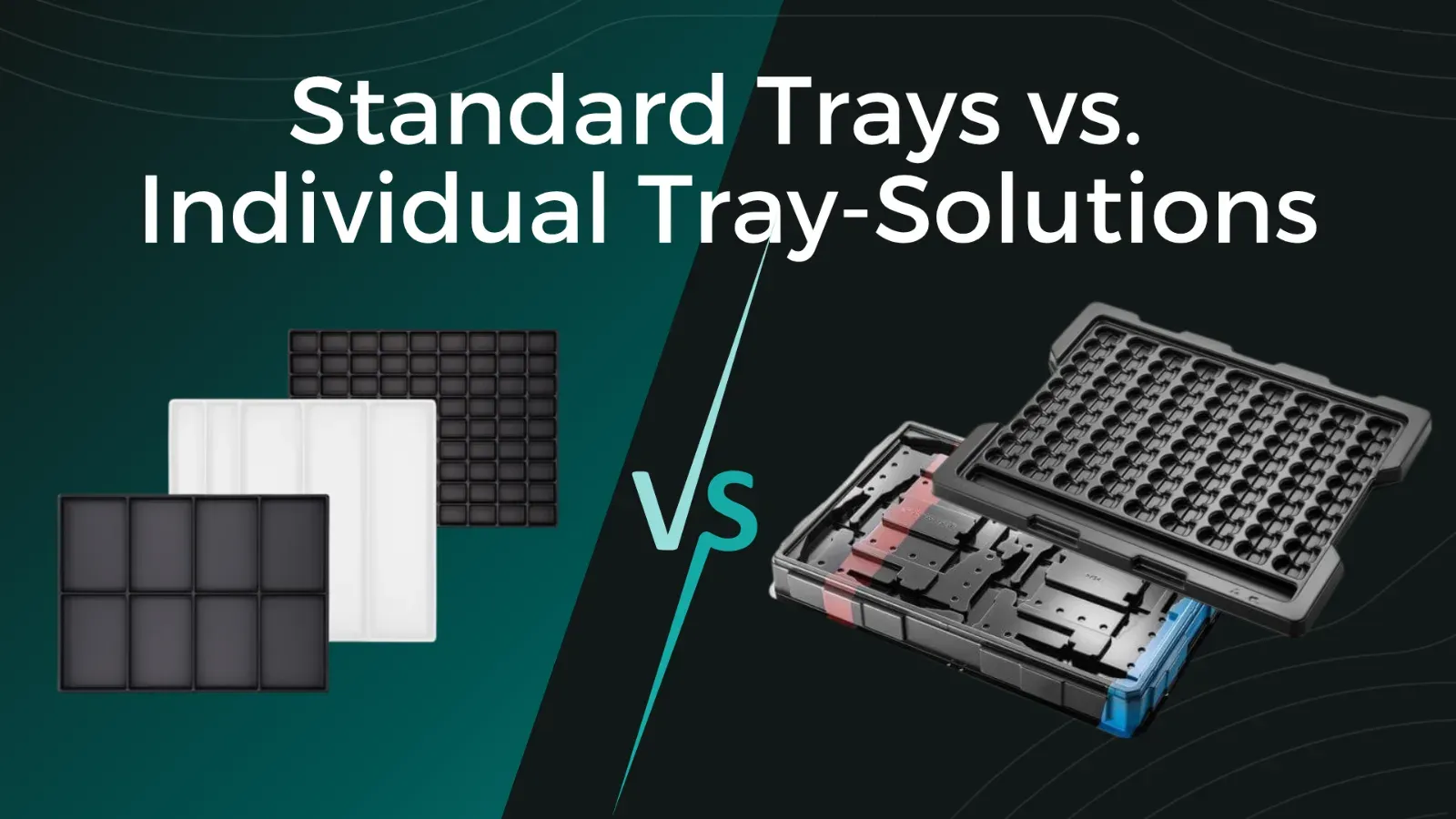
Standard Trays vs. Custom Tray Solutions: Which Option Is Best for Your Project?
Anyone sourcing plastic trays for transport, storage, or production quickly faces the question: choose a standard tray from the catalog or have a custom solution developed by a thermoforming specialist? Both options have their place. The right choice depends on the component, quantity, budget, and project requirements. This article explains which option is the right one for you.
Thermoformed Parts in Practice
Checklist: 10 Details a plastic thermoformer needs from you
You’re planning to source plastic thermoformed parts and want to submit a request for a quote. But what information does a thermoforming supplier really need to provide you with a meaningful quote? Incomplete requests lead to follow-up questions, delay the quoting process, and complicate the technical evaluation. If you provide the right information from the start, you’ll receive a reliable estimate faster and avoid unnecessary back-and-forth.